
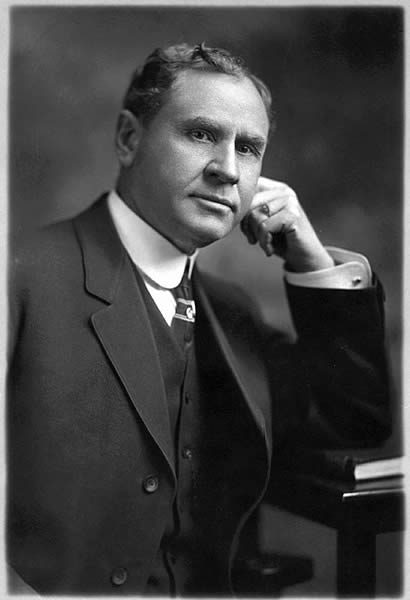
Three generations carried this name: Tom (1859–1935), his son T. L. (1887–1947), and his grandson Latané (1914–1997).
My great-great-grandfather founded the Temple lumber companies of East Texas. He was born on a farm in Virginia, was an orphan at eleven, failed in business twice before he was thirty-five, and died a millionaire in the house in Texarkana where he had lived as a widower for thirty-five years.
What follows comes from four kinds of source, and they carry different weight. There are records made at the time: certificates, court records, deeds, newspapers, his own letters. There are sketches of him printed while he was alive, which rest on what he told the writer. There are two books about his companies and his town. And there is what his grandsons and great-nephews said fifty to eighty years later. My grandfather Latané drew that line himself: “When I write of Tom Temple, I am most generally relating what I have heard.” I have tried to say which is which as I go, and where a point rests on reasoning and not on a document, to say that too. His page in the family archive has the records behind this. The full working tree is on Ancestry, and his profile there needs an Ancestry sign-in.
The name
He was named for his grandmother Temple’s brother, Thomas Lewis Latané, “so he got all three names,” Latané wrote in 1971. In print he was nearly always T. L. L. Temple. To the men at the mills he was Mr. Tom Temple, “Uncle Tom,” and “Old man Tom.” To his Walker cousins he was “Cud’n Tom.”
To his grandchildren he was Burr. He was a widower in his forties when the first of them was born and, Latané wrote, “was not ready for the grandfather image,” so he tried to teach the boy to call him Brother. What came out was “something like Booa. It has always been spelled and, by the rest of us pronounced: Burr.”
Essex County, Virginia, 1859–1876
He was born on 18 March 1859 at Wayland, his father’s farm near Millers Tavern in Essex County. His father was the Rev. Henry Waring Latané Temple, an Episcopal clergyman. His mother was Susan Jones. Both are named on his death certificate. The tree gives them eleven children, and he was the ninth.
His mother died in January 1864, when he was four. The 1870 census found him at home at eleven, “attending school,” with his father, two grown sisters and three other children. His father died in February 1871; the diocese’s journal that summer says the parish “became vacant in February last by the lamented death of the Rev. H. W. L. Temple.”
That he and his father did not get along is the family’s most constant story about his childhood, and it comes from three grandsons. Latané had it from his uncle: Burr “never had many happy memories about his childhood, particularly after his mother died. He remembers being disciplined with a paddle or something out behind the woodshed.” His cousin Arthur Temple Jr. said the father “was awfully hard on my grandfather. And there was no love lost between my grandfather and his father. And he ran away.”
The tellings disagree about when, and none of them fits the record. One has him running away at thirteen from a father who had by then been dead two years. Another has him leaving home soon after his mother died, and the census has him still in his father’s house six years later. What the accounts share is the harshness. A sketch printed in 1889, when he was thirty, says he “was but eleven years old when his father’s death left him an orphan. He remained in his native county until thirteen years old.”
He went to the Walkers. Mrs. Walker was his first cousin Lucy Waring Temple, twenty years older than he was. “He never forgot the kindness of this home,” Latané wrote, and when he had made his own place he made places for her children: one ran the Diboll mill, one travelled for the company, and Janie came to keep his house. The Walkers remembered that he had always told them he “would make one million dollars and retire.” I think he went to them at thirteen, but that is my joining of the 1889 sketch with Latané’s account; the sketch does not say where he went.
Arkansas: the mule in the field, 1876–1880
His mother’s uncle, Dr. Orlando S. Jones, had died in Arkansas leaving a cotton plantation on the Red River. His will of 1861 gave Susan Temple a life interest and then gave the Arkansas land “to the two eldest sons of my said niece Susan living at her death.” The will left Tom nothing.
His father had been out to see it. In the autumn of 1865 he went by sea to New Orleans and up the Red River, and wrote home from the plantation: “Oh! the waste of everything here.” A cousin wrote the next February that he “had returned so much pleased with the west he wishes to move out there.” He never did.
The county’s court and deed books say who got the land. John Newton Temple, the eldest, was made administrator of the Jones estate in April 1869, at twenty-two. On 18 March 1876 the court decreed that the Arkansas lands “vest in the Plaintiffs John N. & Charles H. T. Temple,” Susan’s “eldest son” and “her son next in age.” In January 1880 the two divided 2,216 acres between them, and John sold all of his share that month for $7,000. What became of Charles‘s 841 acres after he died in 1881 I have not found. I read these in FamilySearch’s machine transcripts of the books and checked the decree’s main sentence on the page itself.
In September 1876, at seventeen, six months after that decree, Tom left Virginia for Little River County. The American Lumberman in 1908: “His first Arkansas experience was farming, but it was not to his fancy.” Arthur Jr. told it the way he had heard his grandfather tell it: “he plowed for a few days and one day … he just left the mule in the field and he walked to Texarkana which was about twelve miles, right down the railroad track.” Latané: “Tom did not fancy the prospect of following a mule the rest of his life.”
The family’s accounts say he was working for a brother and disagree about which. No record I have read says whose mule it was.
The walk did not end at a sawmill. The 1889 sketch has him deputy clerk of the county and circuit courts for a year, and then, from 1877 to 1881, “book-keeper by various firms in Texarkana.” He told Latané what the first job was, as a lesson in thrift: “he opened up in the morning, and swept out and closed up at night. And saved his money. He kept the books.” The 1880 census found him in Texarkana, twenty-one, single, a “Book Keeper,” living alone, listed between two lawyers and the county clerk.
Georgie, 1880
On 2 December 1880 he married Georgie Derrick Fowlkes, who was his own age. The date is in the 1889 sketch. Where they married I can’t settle: a county history says Texarkana, Latané thought Virginia, and no marriage record has been read. Her sister was married to Benjamin Whitaker, a Texarkana lumberman who became his partner.
They had seven children, and five grew up: Gertrude, T. L., Marguerite, Georgie and Arthur.
The one sentence of his about his marriage is in a letter to his sister in Virginia in August 1882, when he was running a sawmill and Georgie was away: “some men seem to enjoy the absence of their wives, but it is not so with me.” The same letter: “I do think a sawmill is a great deal of trouble.”
Failing and starting again, 1881–1893
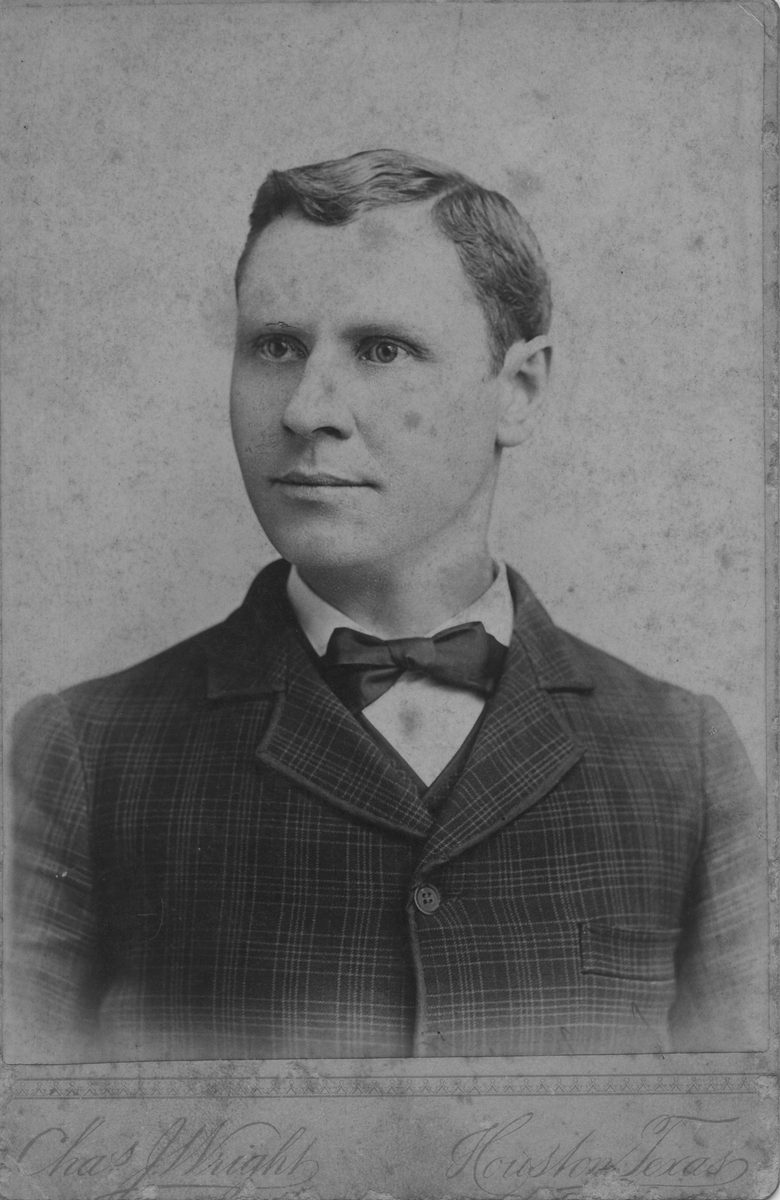
The order of his first ventures differs from teller to teller, and his grandsons knew it. “I really think I’ve got it backwards,” Arthur Jr. said in the middle of telling it. The records give this much.
About 1881 he went into a small sawmill at Wayne, in Cass County, Texas. In 1887 he was one of three incorporators of the Atlanta Lumber Company, and two years later the firm was “Grigsby Bros. & Temple,” with more than a hundred men, and “Mr. Temple is the manager of this vast business.” Then came the first Southern Pine Lumber Company, a partnership with Ben Whitaker in Arkansas. It failed in 1891. A company of the same name that he incorporated in 1892, holding 997 of its 1,000 shares, went into liquidation the next year, by his own testimony. Latané: “when he shut it down he had nothing but debts and the lessons of failure left.”
One piece of those years went to the United States Supreme Court, and it does not flatter him. He and the Grigsby brothers owned town lots in Oklahoma together, four-fifths theirs and one-fifth his. In 1891 a St. Louis bank won a small judgment against all of them at Dallas, and he paid it. In 1894 a suit was filed in Oklahoma Territory in that bank’s name, on the judgment already paid; the lots were attached and sold, and his company bought them. The Grigsbys called it “a mere fraudulent scheme devised by Temple.” The trial court agreed, found that the bank had never brought or authorised the suit, called it “a fraud and an imposition upon the court,” and set the sale aside. The territory’s supreme court affirmed in 1905, saying that by his own testimony “he caused the action … to be brought without consultation with” the bank. The Supreme Court affirmed in 1908, in Southern Pine Lumber Co. v. Ward. His answer, which is in the opinions too, was that he had bought the lots lawfully and that the debt behind the Grigsbys’ claim was a pretence. Nothing in the family’s accounts mentions the case.
He was in his early thirties, with four children. Latané, repeating what his own father had told him, said that while Tom “was busy making his way,” Georgie “ran a boarding house there, helping to support the family.” The one census of her lifetime that survives for the household, in 1900, shows a rented house with no boarders, which is seven years after the hard time and says nothing either way.
In 1893 he tried a third time, in Texas. He went by rail to Angelina County and hired a horse to look at timber. The only lodging was a homesteader’s cabin, “where he shared his bed with a stranger who snored like thunder.” He told his grandson the story as a lesson in his religion: “He managed to go promptly to sleep to awake refreshed and competent. The lesson: correct thought overcomes seeming difficulties.” The family tellings have him buying thousands of acres from J. C. Diboll at about a dollar an acre. The historian Jonathan Gerland, from the county’s deed and mortgage records, says he bought almost none of it. The land belonged to two women, Asenath Phelps of Los Angeles and her niece Rosa Diboll of New Orleans, whose brother Joseph helped them make the bargain. In January 1894 he contracted to build a mill on their land and cut the pine on 6,845 acres around it, paying them seventy-five cents for every thousand board feet as he cut it. When the mill was built they deeded the company the twenty acres it stood on, and he mortgaged it back to them the same day. He paid as he went, which is what a man does who has just failed twice. The women kept the land around his mill for thirty years and sold him only what each expansion needed; the company bought the rest in 1924. Gerland says no one knows for certain who chose the name Diboll. I have not read the deeds myself. His younger brother William came into the company then as vice-president.
Texarkana and Diboll
He never lived at Diboll. “He lived in Texarkana and came down to Diboll on mill visits from time to time,” Arthur Jr. said, “and he didn’t think there was anything strange about living in Texarkana while the operations were someplace else because that was where he wanted to live and it was his mill.”
An old millhand remembered what happened to the Diboll ball ground after a game with Lufkin ended in drinking and a fight. “Old man Tom come in that night from Texarkana. He heard about the fight and closed our baseball down. He took our baseball park and got two old Englishmen to put in a garden there.”
November 1900
Georgie died on 30 November 1900 at St. John’s Hospital in St. Louis. She was forty-one. The city’s burial-permit list gives the cause in one word, cancer. She was buried at Texarkana.
He was forty-one, with five children from nineteen down to six. Gertrude kept the house and raised the younger ones. His elder son, thirteen and away at school, “was not allowed to come home for his mother’s funeral,” Latané wrote. “It marred him and he never forgot it.” That is the son’s memory, told to his own son. No letter of that month survives to show what the father decided or why.
Four months later the father wrote to that boy at school. The letter does not mention his mother. “My dear boy! why dont you do better? Surely you can if you try.- Just think how mortifying it would be to be expelled.” It ends, “With a heart full of love.- and the hope that you will improve in your studies & deportment, I am.- Your devoted Papa.”
He never married again.
Christian Science
“He was disgusted with doctors because they hadn’t been able to do anything for her,” Latané said. “That’s when he turned to Christian Science.” That is his grandson’s explanation, given eighty-five years later, and Latané said elsewhere that he was not sure when it happened. What the record shows is that in July 1903, when the charter of the First Church of Christ, Scientist, of Texarkana was filed, his was the first name on it.
The same year he brought a Christian Science couple from St. Louis to Diboll. Mrs. Farrington remembered him saying, “God, Divine Help, always has and always will meet every human need.”
His letters to Mary Baker Eddy are at The History Center in Diboll. In May 1906 he sent her a pair of horses from Lexington, Kentucky, and wrote of his company: “I wish you to know that much of its success I attribute to Christian Science – for which I am very grateful to you.” She telegraphed from Concord that “the span of beautiful bay horses arrived safely as seen from my window they are perfectly exquisite.” A later letter of his regrets “that you cannot use the horses.” That June he thanked her for a copy of Science and Health and a locket. Latané remembered a gold locket that his grandfather “always wore on a chain.”
His grandsons did not agree on how far it went. Arthur Jr.: “I don’t think he was actually a member of the church but he practiced it.” A great-nephew: “Uncle Tom didn’t believe in doctors … He didn’t want any doctors to fool with him.”
How he ran it
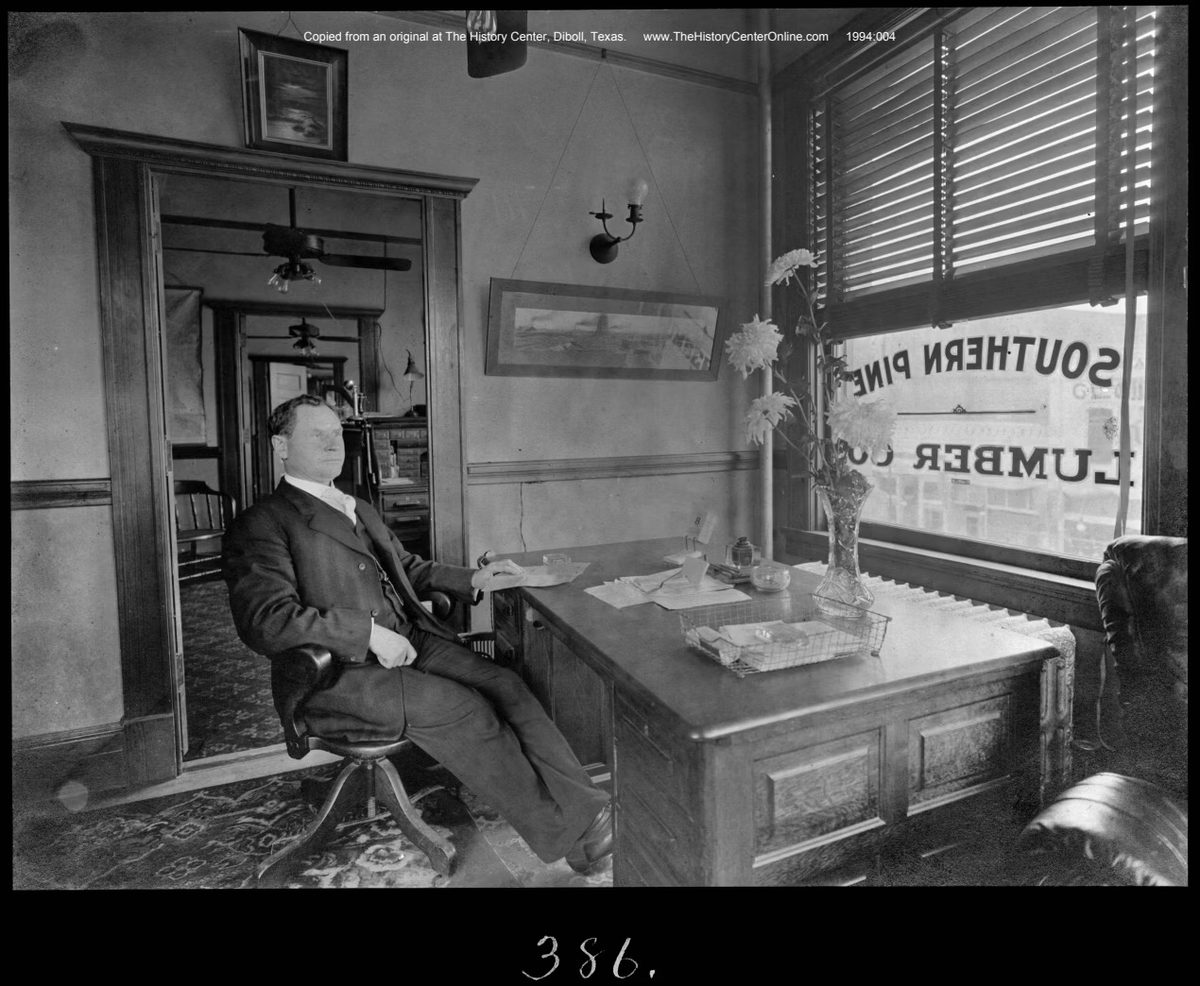
“He ran it out of his hip pocket more or less,” Arthur Jr. said. “The only policies he had were to acquire land, grow the business, treat his people awfully well.”
The men who worked for him remembered particulars. He was up before his managers and “all over the works.” He could not bear waste: at the Pineland planer, if he saw a short piece of lumber fallen from a truck he would pick it up, work out what it was worth, “write on it with a pencil and lay it on my desk.” He looked in the mule troughs, and finding them empty told the woods boss, “That’s all them mules get; is what they eat. We don’t know whether they get enough or not ’till they leave some in the trough.”
He knew names. In the summer of 1933 the Black workers at the Diboll mill came up to Latané to tell him that when his grandfather came to the mill, “he never failed to walk through the mill and speak to everyone of them by name and shake their hands.”
He was harder on his own. His nephew Henry, new at Diboll in 1906 and reading the paper on the timber dock, was asked, “Is that all you’ve got to do, is sit here and read the newspaper?” Henry’s son said he “was pretty stern, probably more stern to him because he was a member of the family.”
He gave quietly and by hand: a bicycle to a girl for giving up chewing gum, a coat to a girl who needed one, company stock to foremen who could “pay for it when they could.” Arthur Jr.: “He was very stingy with himself, but very generous with other people.” And also: “it was of course, paternalistic in the extreme.” The men worked eleven-hour days, six days a week, for $7.50 to $9.00 a week, and the man who shut the ballpark made “stern moral demands of his workers in areas like liquor and tobacco.”
The Walkers’ million came early. The historian Jonathan Gerland says he had made it by his early forties and left the daily running to L. D. Gilbert at Texarkana, though he stayed president of everything until he died. The companies grew: Pineland and the Temple Lumber Company, a railroad, a cotton-oil company, and in 1921 the Knox mill at East Mayfield, for a price “presumed to be about $3,000,000,” signed at Pineland “at 11:30 at night.”
Not all of it was sound. From 1913 the cutover land on the Neches was fenced as a cattle ranch, and Gerland says the cotton-oil company, with five mills in Arkansas and Oklahoma, was organised to feed its cattle through the winter. In 1927 he was persuaded to buy about 27,000 acres of grazing land in South Texas for the same herd; his son sold it in 1936 for less than half the price. Gerland calls the ranch a white elephant. He seldom hunted there himself, and went, he said, for “being with the boys.”
Tennis, golf, bridge, music
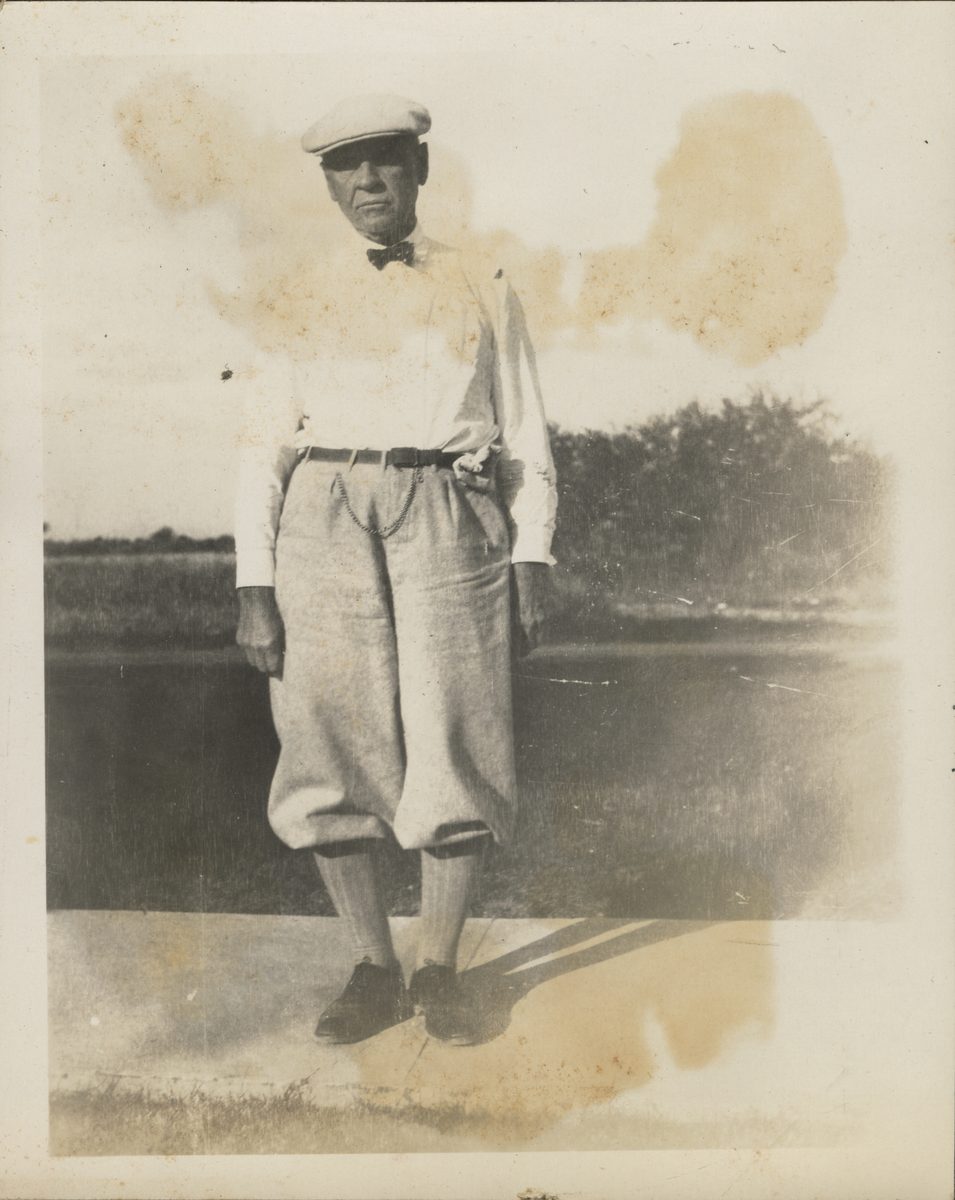
“He practically brought tennis to Texarkana,” Latané wrote, “building tennis courts, sponsoring tournaments and attracting outstanding players.” He was the first president of the Texarkana Country Club in 1913.
Then golf. Latané caddied for him: “aging but determined, laboring around the course, wearing white knickers, a white shirt and a white snap-bill cap.” A missed shot brought “his worst expletive, which sounded something like an oldtime steam locomotive when its wheels slip on a pull: Pshaw, pshaw, pshaw, pshaw!”
Bridge every evening, never for more than a tenth of a cent a point. And music. He made his children study it, and at Pineland the piano teacher got up a programme every time he came: “I played ‘Hungarian Rhapsody’ every time he came. He loved it better than anything.”
The Charters suit, 1912
In May 1912 a New York Christian Science healer, Charles Charters, whose wife was suing him for divorce, sued “Thomas L. L. Temple, a millionaire Texan,” for $100,000 for alienating her affections. It came to trial that September. Mrs. Charters testified that she would not marry him if she were divorced, and the judge “ordered a nonsuit,” saying “that there had been no evidence produced to prove that Temple had alienated the affections of Charters’ wife.”
That is an allegation and its dismissal. An appeal was announced and I have found none. Nothing in the family’s recollections mentions the case.
Quogue
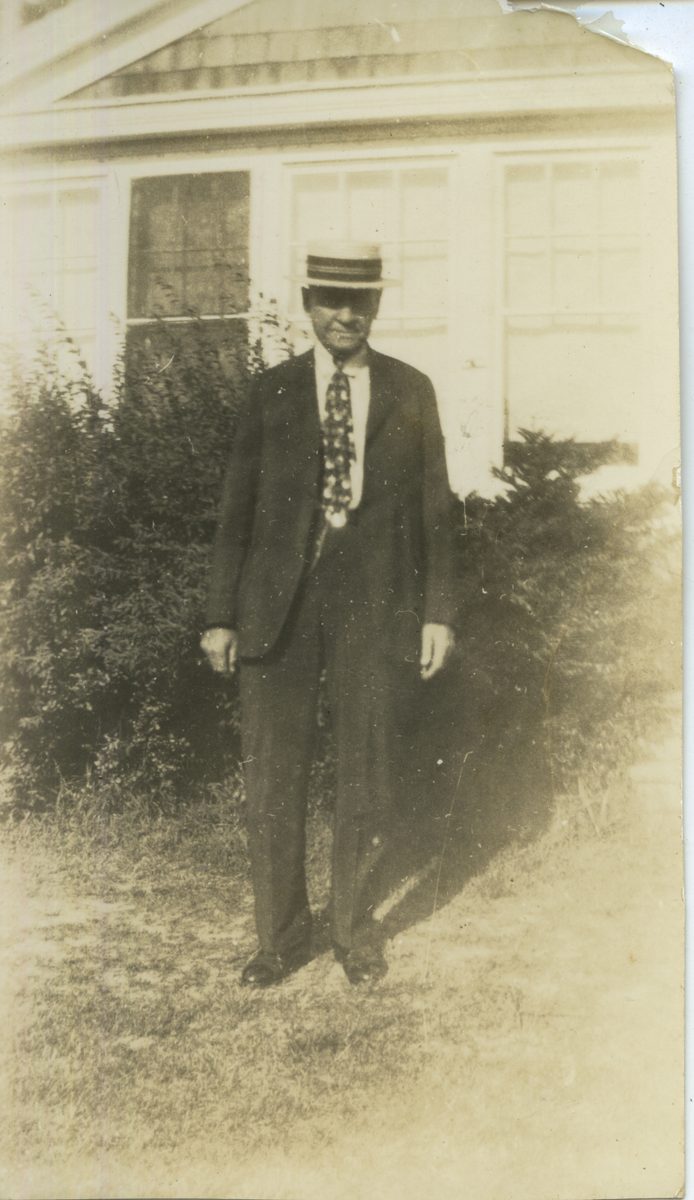
About 1900 he began spending summers at Quogue, on the south shore of Long Island, in a three-storey shingled house with seven bedrooms. After Georgie died he was there five to seven months of the year.
“Like princes throughout history, in summer he moved his court from the capital,” Latané wrote. He brought his cook, his maid and his chauffeur from Texarkana, and the grandchildren, the nieces, and whichever adults he had summoned. The house ran on his watch. “The day began … at exactly 7 a.m. … because my grandfather … sounded reveille by pounding with the heel of a shoe on the floor of his bedroom.” The beach at 10:45, “(exactly).” Lunch at noon, just when the surf was good: “a bowl of vegetable soup.” Bridge every evening. “Burr was a relentless host, harder probably on his adult guests than his grandchildren, for they were there to entertain him as much as he them.”
A niece wrote that he “didn’t just belong to his immediate family. He belonged to all his nieces and nephews … He seemed to really care about us and came back every year to see us.”
Quogue also settled where he lived, on paper. He was out of Arkansas enough of the year to owe that state no income tax, and he kept the count: “I would not go anywhere, but for the fact that I have got to spend six months out of Arkansas, and had better be starting on it.”
His sons
He had two, seven years apart, and they were not alike. Of the younger he wrote in 1903: “Arthur, as you say, is very good-for-nothing … He is very much like T. L.; I don’t know why they should be so indifferent.” Arthur turned out otherwise, and took over the companies when his father could not carry them.
T. L. has his own biography here, and only his father’s side of it belongs in this one. By his daughter-in-law’s account he chose his son’s wife. Sitting on the gallery in Texarkana “in remonstrance” with T. L., he saw Hal Crouch ride by and said, “Now, there’s the girl you ought to marry.” And he promised her: “If you will marry my boy and make a man of him, I’ll never forget it. I’ll always look after you.” She held that promise against him for the rest of her life.
“My grandfather was partial to my father and my father could do anything with him,” Latané said. His letters of 1930 show what that looked like near the end. T. L. was at McAllen with a citrus orchard, asking the company for money, and his father stopped it: “at the present time, I feel very poor, and I think the rest of us do … I wish that you could appreciate the situation more keenly, and be more economical in your expenditures.” Every one of the seven letters closes “With love” or “With much love.” The estate papers show that when he died each son owed him a note of the same date in 1934, at no interest: T. L. $103,500 and Arthur $82,110.
Burr at home
His house was at 304 East Fifth Street, Texarkana, on the Arkansas side. The family called it Fifth and Walnut. He built Gertrude a house next door, “a miniature of his own,” and his brother William lived at 406 Walnut. In 1930 the census found him there with his cousin Janie Walker keeping house, a maid and a cook.
“An invitation to dinner to his children … was a summons,” Latané wrote. Everyone waited in the library, the old man “holding court in a heavy mahogany rocker” under a chiming clock, until the doors were opened and dinner announced. At Christmas he gave each small grandchild a five-dollar gold piece. But “he did not believe in birthdays; or, more particularly, in age.”
From the fall of 1932 to the spring of 1934 Latané, at seventeen, lived with him. By then, he wrote, “Burr … had gentled in my experience and his house … was a quiet sanctuary. Quiet except when I operated the player piano and Lizst or Chopin filled our space, and Burr with his eyes closed sat rocking in that great chair.”
One evening from those two years Latané called “very important to me.” He had been to municipal court with his football friends and came home imitating a Black woman who had been on the stand. “My grandfather didn’t think it was funny, he said ‘Well, what did they do?’ I said ‘She got 30 days in jail.’ He said ‘They just don’t treat those people right, they don’t treat them justly.'” Latané traced his own politics to that evening, and said plainly that it was a rosy view. His grandfather was also, in Latané’s words, “a son of a Virginia slave holder,” whose mills and towns were segregated.
The Depression
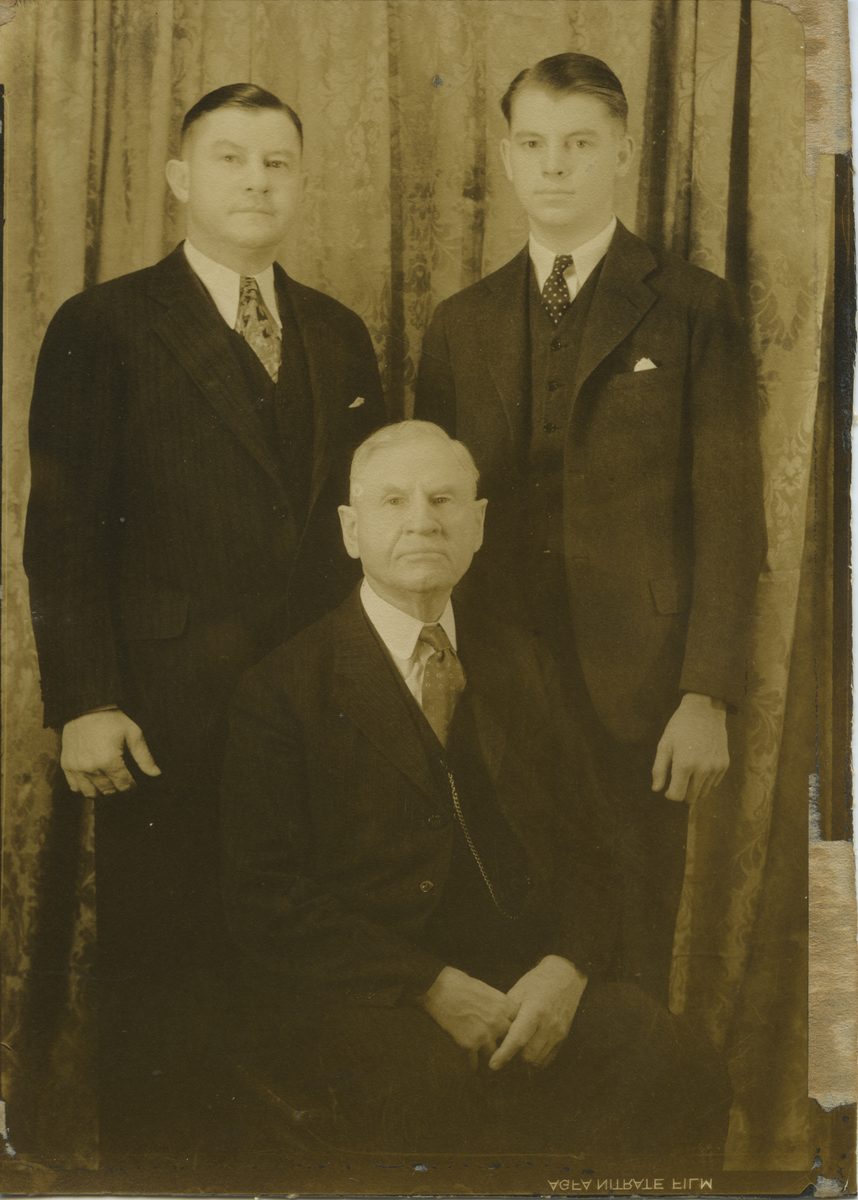
The cotton went first. In January 1930 he wrote: “The cotton situation has played the mischief with us, and don’t know when it will recover, if at all … I surely would like to get out, lock, stock and barrel, and stay out for all time.”
Then the lumber. The companies lost money in 1931 and 1932, and Gilbert, who had run them for him, died in 1931. Arthur Jr.: “The depression just about wiped him out … And my father had to take over the operation because my grandfather really by that time couldn’t cope with it. He had been used to being successful and he just … He just couldn’t face the … the problem.”
The mills ran anyway. “To my certain knowledge,” Latané said, “when other mills were shutting down we kept running because my grandfather didn’t want those people to be out of jobs.” And elsewhere, flatly: “the Depression killed him.” That is a grandson’s judgment. The certificate gives a heart.
He was still deciding things. Gerland tells of a fight I had not known about. The company had withheld its taxes in Trinity County for four years in a dispute over what its land was worth, and in February 1935 the county’s school officials came to Texarkana to say the schools were “at the end of their rope.” His son Arthur wanted to pay. By Gerland’s account the decision was left to the company’s land man only because the old man insisted, and the fight went on with his “direct support” until it was settled that May. That is Gerland’s reading of company letters I have not seen.
October 1935
He came home from Quogue at the end of September. His death certificate says the rest. A Texarkana physician attended him from 28 September. The cause is written as coronary sclerosis with angina pectoris, and a coronary occlusion on 29 September. He died at home at 2:10 on the morning of Wednesday 2 October 1935, aged seventy-six. So the man who “didn’t want any doctors to fool with him” had a doctor for his last five days. Who sent for one is not recorded.
His elder son was in Mexico, near Durango, and word had to be sent. The family’s story of the deathbed turns on that. As Latané had it from his cousin, the dying man held Arthur’s hand and said, “T.L., how wonderful it is that you are here.” Both tellings of it are at second or third hand. The two I have are from T. L.’s sons, but Latané thought he had it from Arthur Jr., whose father was the one holding the hand.
The funeral was at the house on 4 October, and he was buried at Rose Hill. The day before, the Texas Senate adopted a resolution by a rising vote: “by reason of his many deeds of kindness to his fellow men, and by reason of his great interest in his employees, Mr. Temple’s name became a household word throughout many communities in East Texas.”
Afterwards
Arthur became president of all the companies. The estate was opened in Angelina County, Texas, and Arthur swore that his father “died a resident of the County of Angelina.” Arkansas did not accept that, and in 1936 the county judge held up the Texas tax until “the controversy is settled … as to the residence of the deceased.” How it was settled is not in the pages I have read.
The affidavit puts the net estate at $2,161,025.36, nearly all of it stock in his own companies. He had $4.00 in cash. The jewellery came to $570, and the list includes two wedding rings, a thimble and a locket.
His three daughters gave the house on East Fifth Street as the Temple Memorial Home for Crippled Children. His aunts and uncle let Latané, who bore the name, have the gold watch, the silver brushes and the library clock.
Latané wrote four columns about him in 1973 and gave up trying to make them whole: “I cannot bring off something with a beginning and a middle and an end.” What he left was this: “I remember him … as a patriarch ruling over his clan in Old Testament fashion, but I remember him also as a twinkling old elf, one who showed his soft side in his old age.” And: “Maybe he is less than saintly to some. I do not know, but if he is, that image will have to wait on their testimony.”
Some of that testimony is in this piece, and it comes from his own family and from the courts: a daughter-in-law who thought he broke his word, a son who was kept from his mother’s funeral, a great-nephew who found him sterner with kin than with strangers, and three courts that found against him over the Oklahoma lots.
What isn’t known
Whose farm he worked on in Arkansas in 1876, and what became of his brother Charles’s share of the land. Where he and Georgie were married. Why his son was kept from the funeral in 1900. When he became a Christian Scientist. What his will says: there was one, and a copy is in the company records at Nacogdoches, unread. How the quarrel with Arkansas over his residence ended. And what is in the company’s letters about him and his sons, which fill several boxes there and are the largest body of evidence about him I have not seen.
If you know any of this, or have a letter or a photograph, I would be glad to hear from you.
Sources
A version of this piece with a note for each claim gives the full citations.
Records. His Arkansas death certificate (1935); the 1870, 1880, 1900, 1910, 1920 and 1930 censuses; the will of Orlando S. Jones (1861); Little River County, Arkansas, probate, chancery and deed books (1869–1880), read in FamilySearch’s transcripts; the journal of the Diocese of Virginia (1871); Southern Pine Lumber Co. v. Ward, 208 U.S. 126 (1908) and 16 Okla. 131 (1905); the inheritance-tax file of his estate, Angelina County probate no. 0226; and Texas Senate Resolution No. 14 (1935).
Printed in his lifetime or just after. Biographical Souvenir of the State of Texas (1889); the American Lumberman (1904 and 1908); and Chandler and Howe, History of Texarkana and Bowie and Miller Counties (1939).
Newspapers, 1887–1935, among them the Austin American-Statesman, the San Antonio Express, the St. Louis Republic and Globe-Democrat, the Memphis Commercial Appeal, the Brooklyn Citizen, the New York Herald, the Jersey Observer, the Lake Charles American Press, the Shreveport Journal and The Monitor of McAllen.
Letters. His own to his sister (1882), to his son (1901, 1907 and seven of 1930) and to his daughter (1903); his father’s from Arkansas (1865); and his correspondence with Mary Baker Eddy (1906–07). The Wayland family letters and the Eddy letters are held by The History Center in Diboll; the Wayland letters I read in a typed transcription.
Photographs. From family albums and from Latané Temple’s scrapbooks at The History Center, Diboll; the office photograph was made for the American Lumberman in 1907 and is the Center’s.
Books. The Cornbread Whistle (1986), oral history from Diboll; and Jonathan K. Gerland, Boggy Slough (2022), whose fourth chapter is the fullest account of him in print. It cites deeds and company letters I have not seen.
His grandsons and great-nephews. The History Center’s 1985 interviews with Latané Temple, Arthur Temple Jr. and Gresham Temple, and its 2001 interview with Bill Temple; Latané’s “In My Opinion” columns in the Diboll Free Press (1971–1977); and family recordings of 2013 and 2022, which are machine transcripts nobody has checked by listening.