
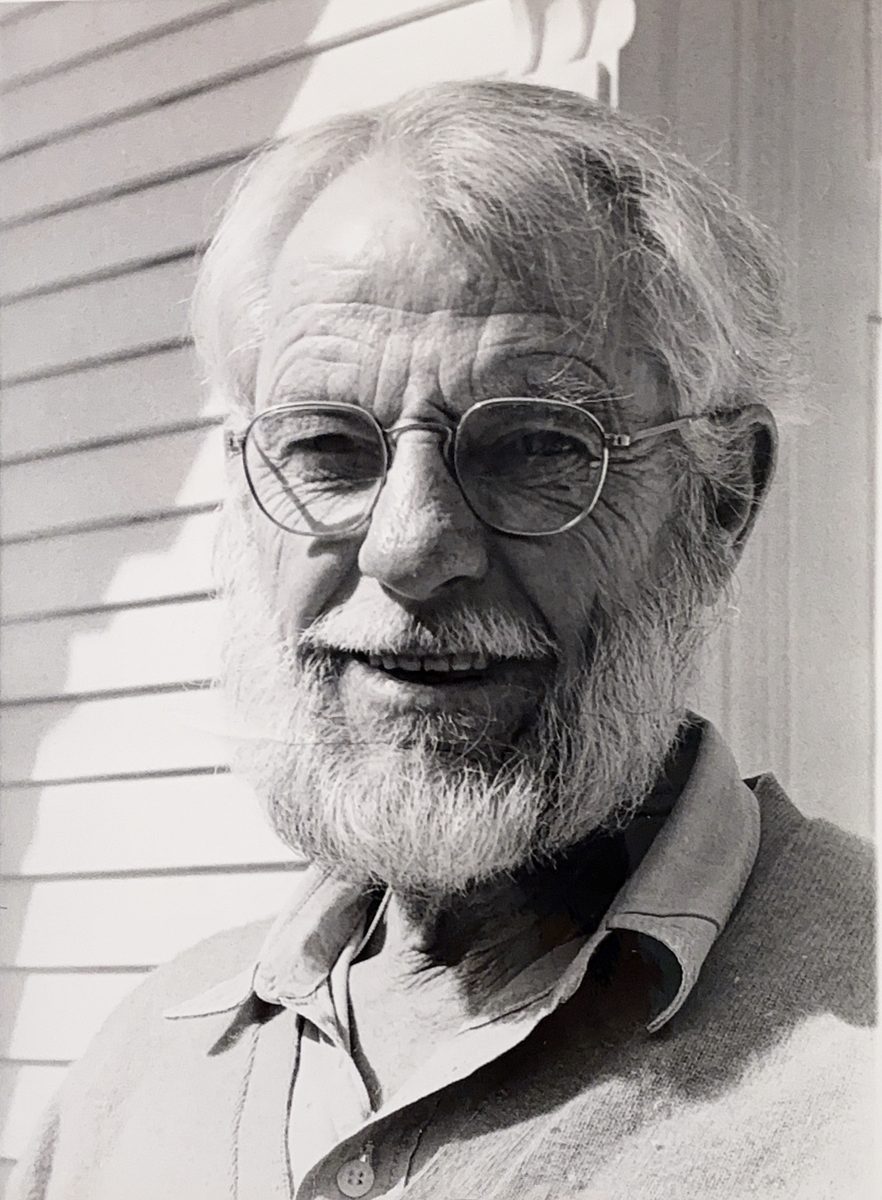
Three generations carried this name: Tom (1859–1935), his son T. L. (1887–1947), and his grandson Latané (1914–1997).
My grandfather was a painter, a collector, a poet and a newspaper columnist. Before that he was an infantry officer, a cottonseed buyer and a lumber executive, and for most of thirty years he worked in his family’s companies, where he came to think he had been miscast.
In July 1985, at seventy, he sat down with an interviewer from The History Center in Diboll and opened this way: “I believe I am one of the most successful, happiest people that I have ever known.” Then he named “a triad of failure” and said what the three were: “These are marriage, a war and business, a role in business.” He spent the rest of the afternoon going through them. I have tried to tell his life with both of those sentences in view, because he did.
Most of what follows is his own account of himself, given late. He was seventy when he recorded the interviews, and fifty-five to sixty-three when he wrote his newspaper columns. He was the man best placed to know and the one with the most reason to shape it. Beside his account there are records made at the time, such as newspapers, letters and the list of his papers, and there is what other people said of him: his cousin Arthur Temple Jr., a newspaper columnist, a visitor to San Miguel, and the family in recordings made in 2013. I have tried to say which is which as I go, and where a point rests on reasoning rather than a document, to say that too.
His second wife and three of his five children are living, and I have not named them. His page in the family archive has the records behind this, his columns and poems, and photographs, and his paintings, drawings and prints are in The Art of Latané Temple. The full working tree is on Ancestry, and his profile there needs an Ancestry sign-in. His father’s story is told here.
His art
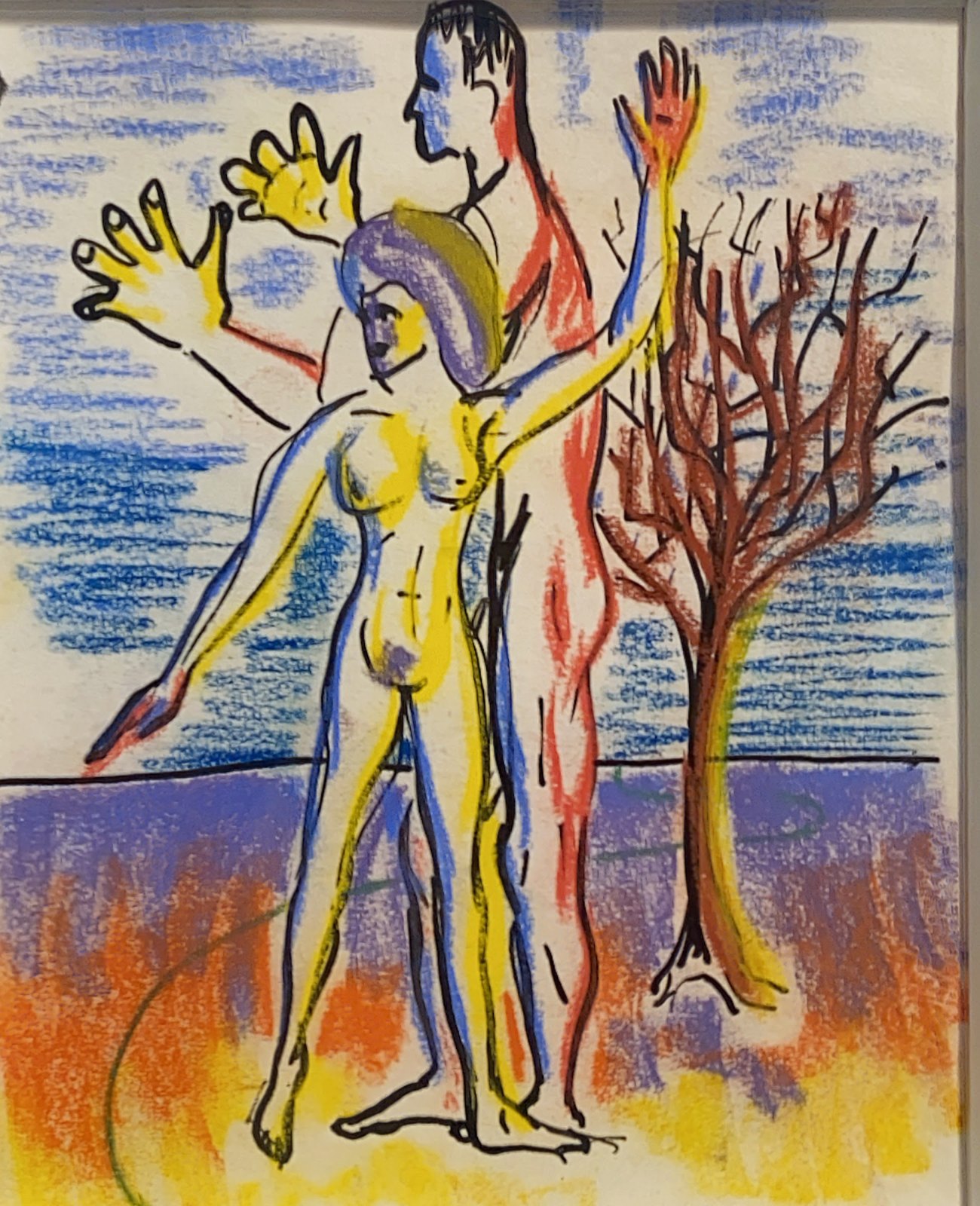
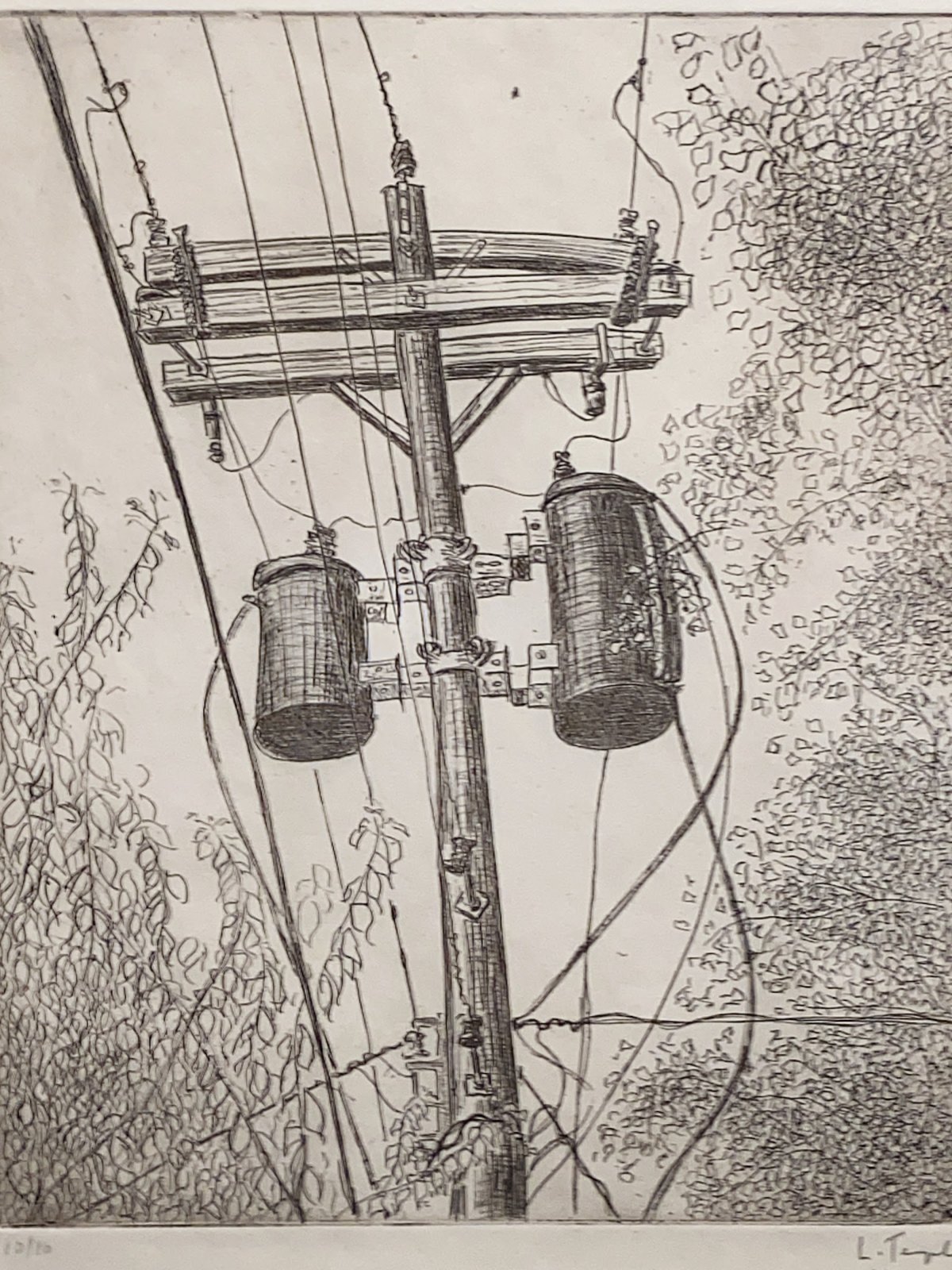
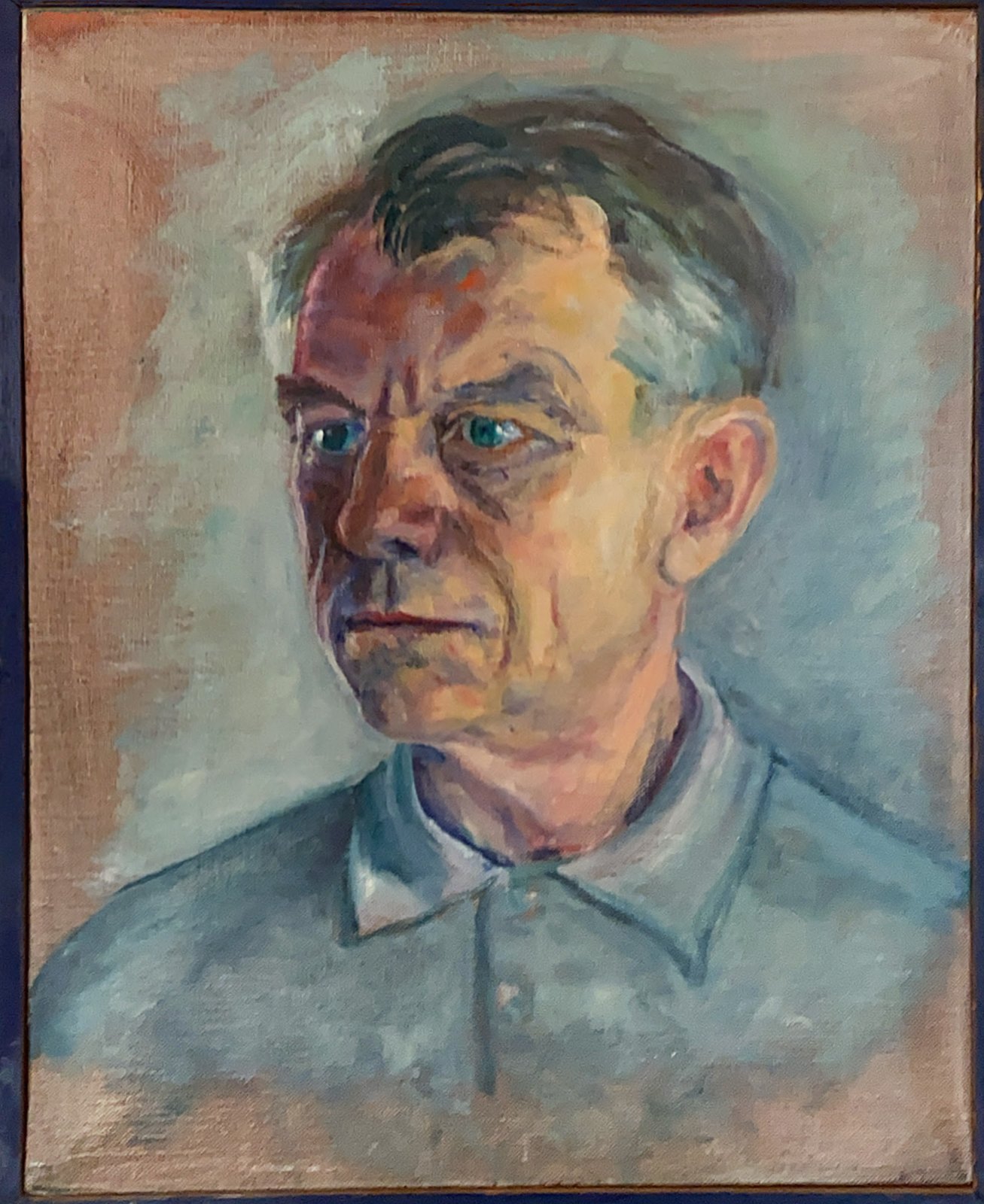
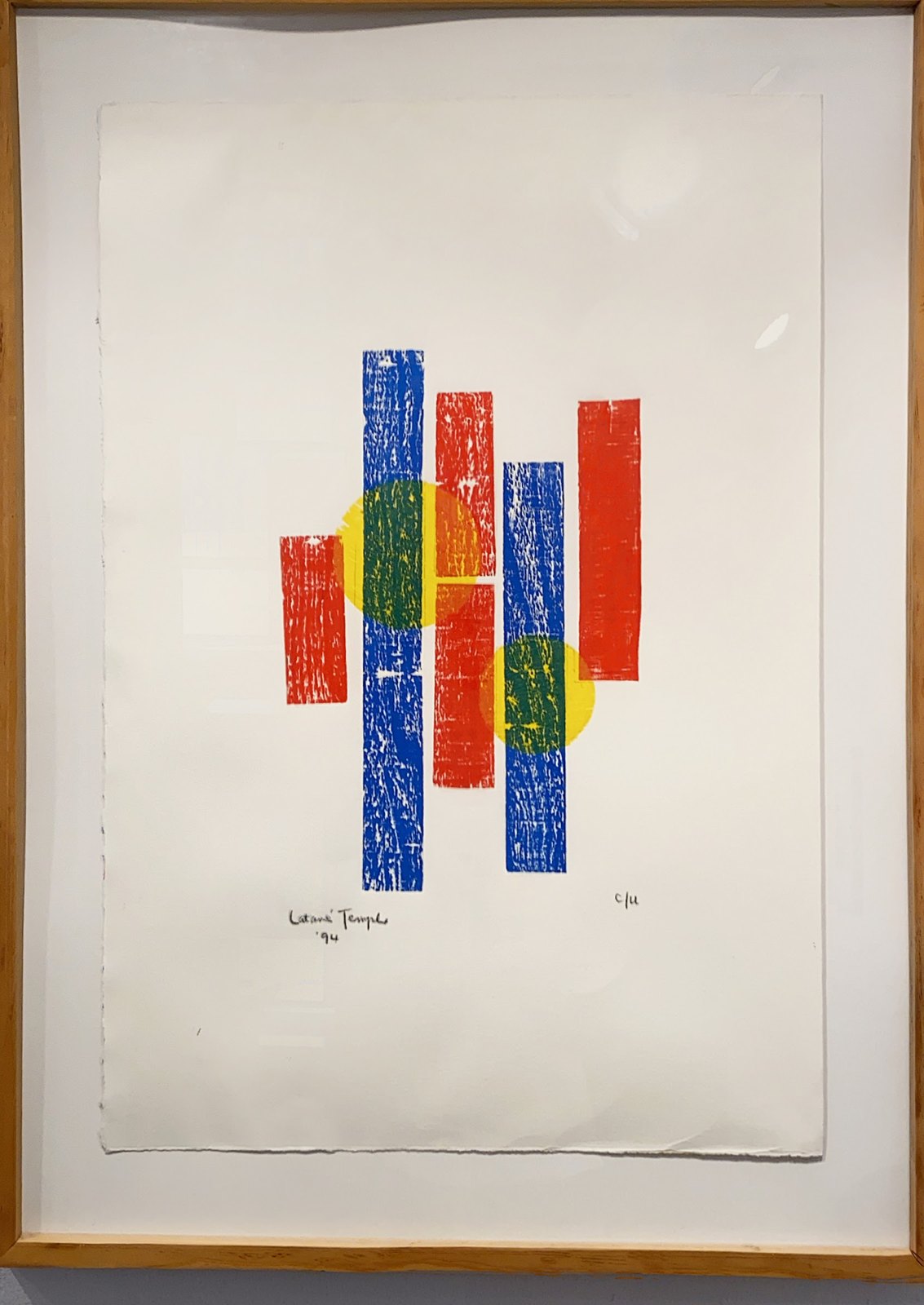
His paintings, drawings and prints are gathered in The Art of Latané Temple. These four run from 1955 to 1994.
The name
“Latane is not my first name. It is my third,” he wrote in 1977. He was Thomas Lewis Latané Temple III. “Because it was unusual and difficult to handle, I used Tom every new place we moved to up to and through army service in War II.” The Houston Post told its readers in 1960 that the name was “pronounced Latin-y.”
Houston and Texarkana, 1914–1924
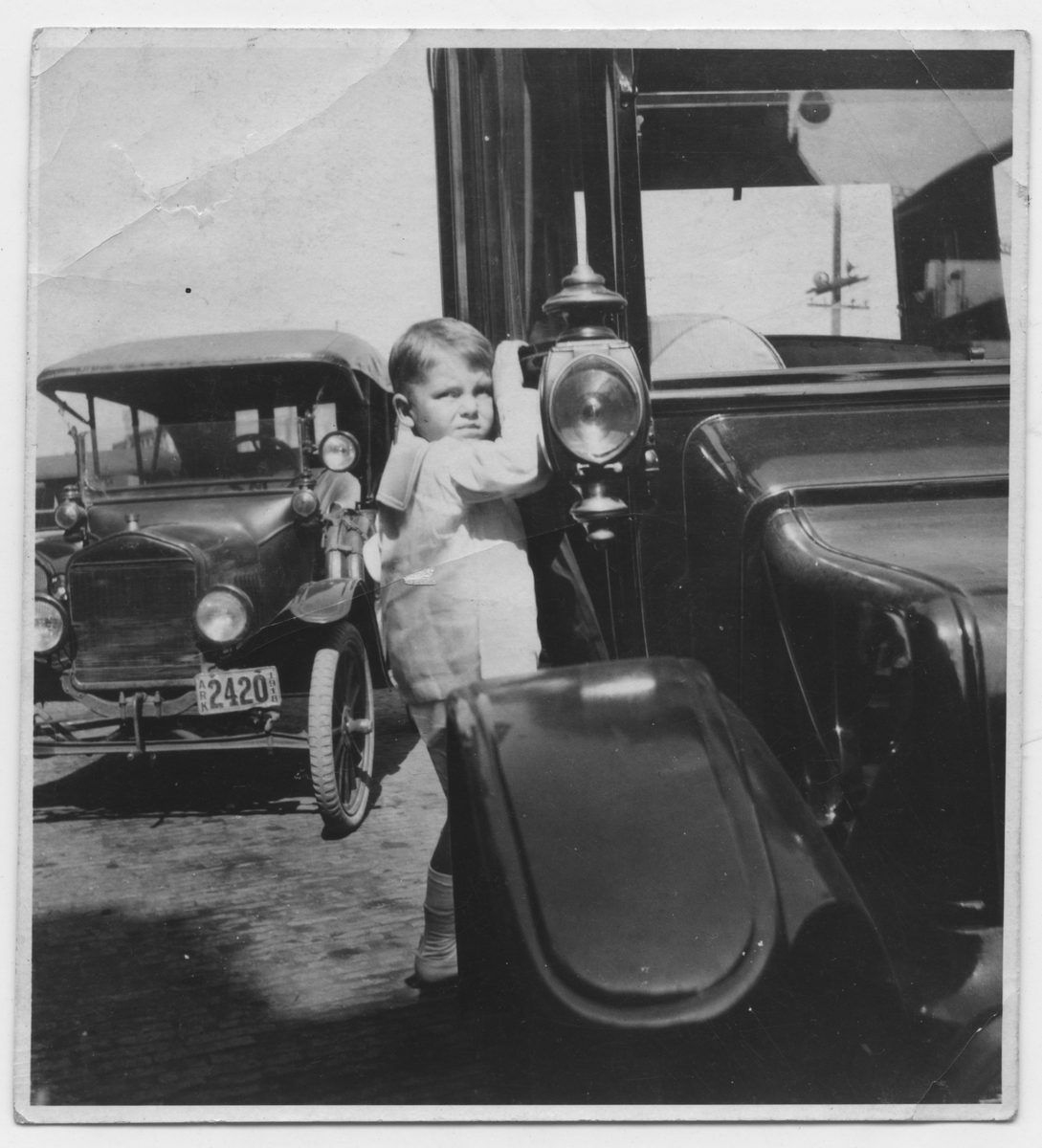
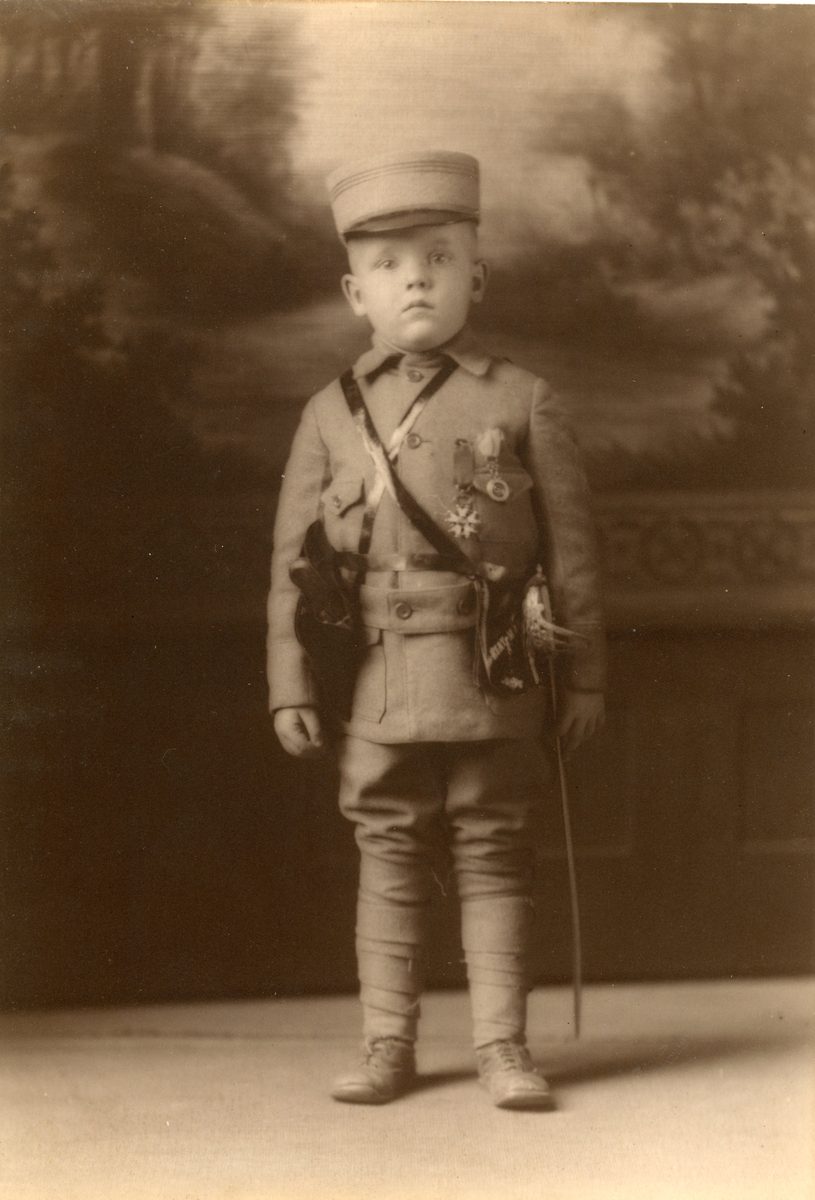
He was born in Houston on 12 December 1914. By his own account it was “at Fannin and Bell where the Humble Building is now, or across the street from it.” His father, T. L. L. Temple Jr., had started the family’s first retail lumber yard there. His mother was Hal Crouch of Texarkana. He had one sister, Helen, three years older.
When his father went into the Army in 1917, his mother took the children home to Texarkana, where, he said in 1985, she “lived with her parents without any support or help from anybody.” “So, anyway, my early memories were living with my Grandmother and Grandfather Crouch on Hickory Street between 4th and 5th.” His grandfather William Crouch was a railroad conductor. Of his grandmother, Hallie Edwards Crouch, he said: “I never loved anybody in the same way as I loved Big Mamma. I remember on dark winter days, particularly, under a drop light, she would read to me out of the book of knowledge and I was in heaven.”
His father came home in 1918 and, with his own father’s help, bought the house at Tenth and Hickory. Latané remembered it in a column: “Tenth and Hickory in Texarkana in the early Twenties. The glorious luxury of jumping out of bed into soft, faded denim overalls.” He had a Shetland pony. He drew: “Frank Mullin and I were both – would draw pictures and our favorite subject apparently was schooners, or boats.”
He called it a “rather unhappy childhood.” His father “drank heavily and he would disappear for weeks, if not months, at a time.” He believed his father had struck his mother more than once, and he added that “it could have well been provoked.” The best of it, he said, was staying with his grandmother while his parents were out.
He told one memory twice. In a column: “One of my early memories was of a lynching, in this case of a black man caught in theft who shot and wounded a deputy sheriff.” On tape in 1985: “I can remember the terror I felt with all that. We could hear the shooting and I could imagine what was going on down there with both my parents missing.” He gave no date.
The summers were different. “Most of my summers as a child were spent there at his house in Quogue, Long Island,” he wrote of his grandfather, T. L. L. Temple, whom the family called Burr.
The divorce, St. Louis and Nacogdoches, 1924–1929
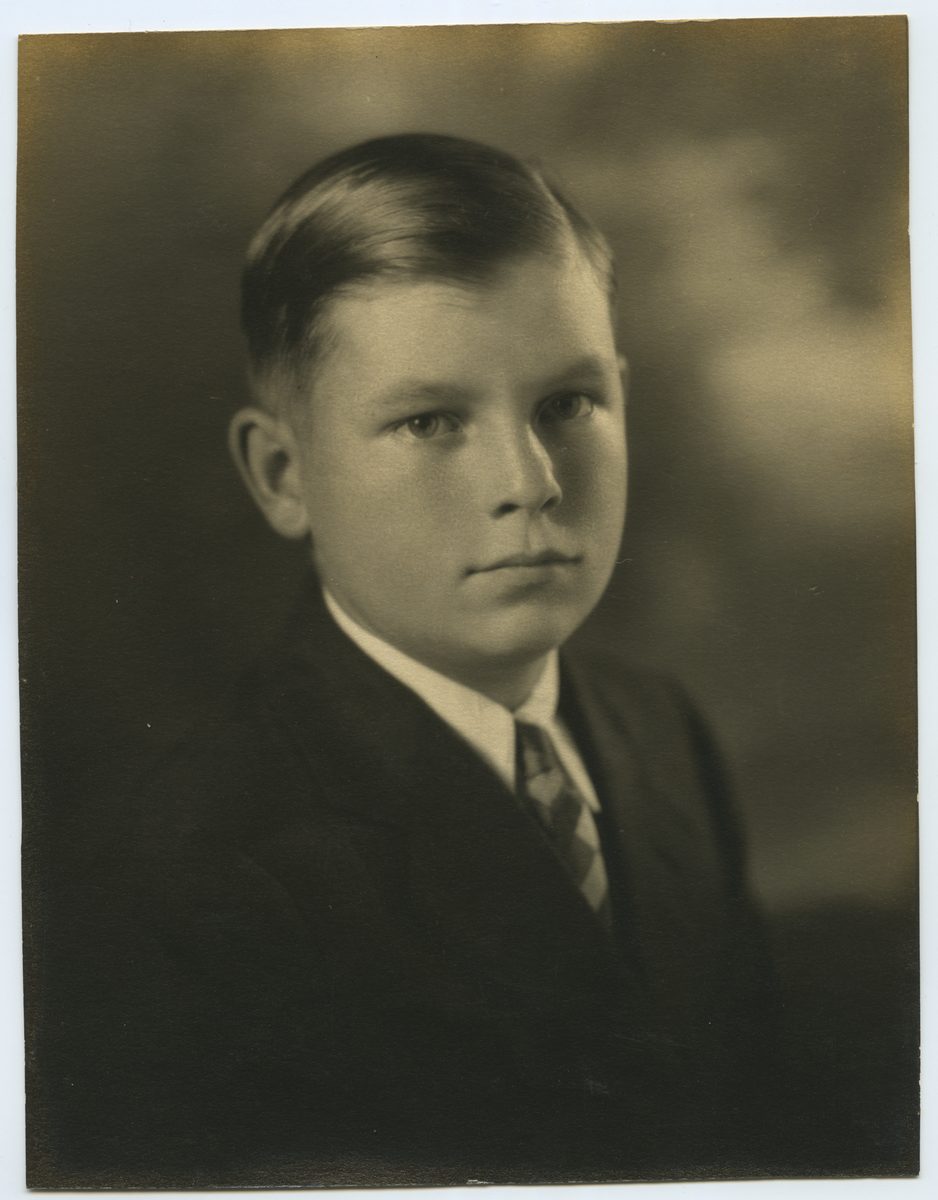
His parents’ marriage ended when he was a boy. He told it in 1985: “until 1924, I guess, when I was ten years old and, at that time mother filed for divorce and I can remember how wretched I was when my father was the one chosen to make the announcement to me and to tell me that I was coming with him and my sister was going with my mother. That was the beginning of what was very nearly a breakdown for me.” In the event he went with his mother. In another interview that summer he put the breakdown at “about 12.” Both ages are his, given two months apart, and I have not read a court record that would say which is right.
He added the decade up in a column about the Twenties: “When they were rung in, I was five. When they fizzled out I was fifteen. Of those ten years, I spent five in Texarkana, two in St. Louis and three in Nacogdoches, during which two were off at an eastern prep school.” His papers hold a Texarkana report card for 1924–25 and St. Louis Country Day School yearbooks for 1926 and 1927.
Nacogdoches was his mother’s sister’s town, and he loved it. “Sweaty August reminds me of some of the best days of my life spent in Nacogdoches,” he wrote.
Lawrenceville, 1929–1932
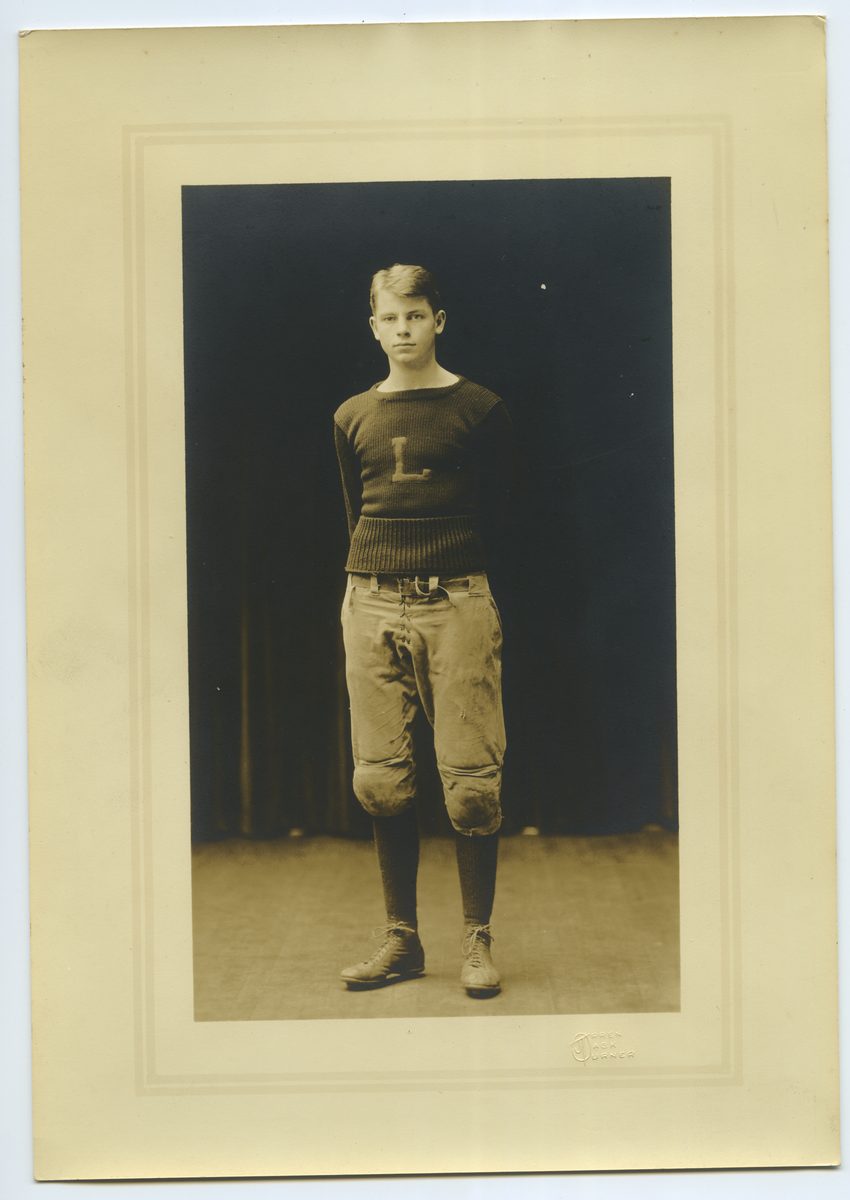
His father had gone to the Lawrenceville School in New Jersey and, Latané said, “insisted that I go to it when I grew up.” The guide to his papers dates him there from 1929 to 1932 and lists his letters home, four yearbooks, a 1931 football team photograph and the 1932 commencement programme. The Trenton paper reported Class Day on 18 June 1932: “Thomas Lewis Latane Temple, 3d, Texas, opened the program with the address of welcome.”
His own verdict was in a column: “I went to a fancy Eastern prep school as a boy and would have given anything to be what we referred to then as a big shot. I never made it, but I came out for everything: all the sports, the dramatic club, elocution, the publications, — you name it.”
When he first went away to school is told several ways. His papers include “Lawrenceville School Records, 1927–1929” as well as attendance from 1929. He said he saw his first talking picture “In Trenton at thirteen,” which would be 1928. His daughter Kate said in 2013 that he was about eleven. The school’s own register would settle it, and I have not seen it.
Home to his grandfather, 1932–1934
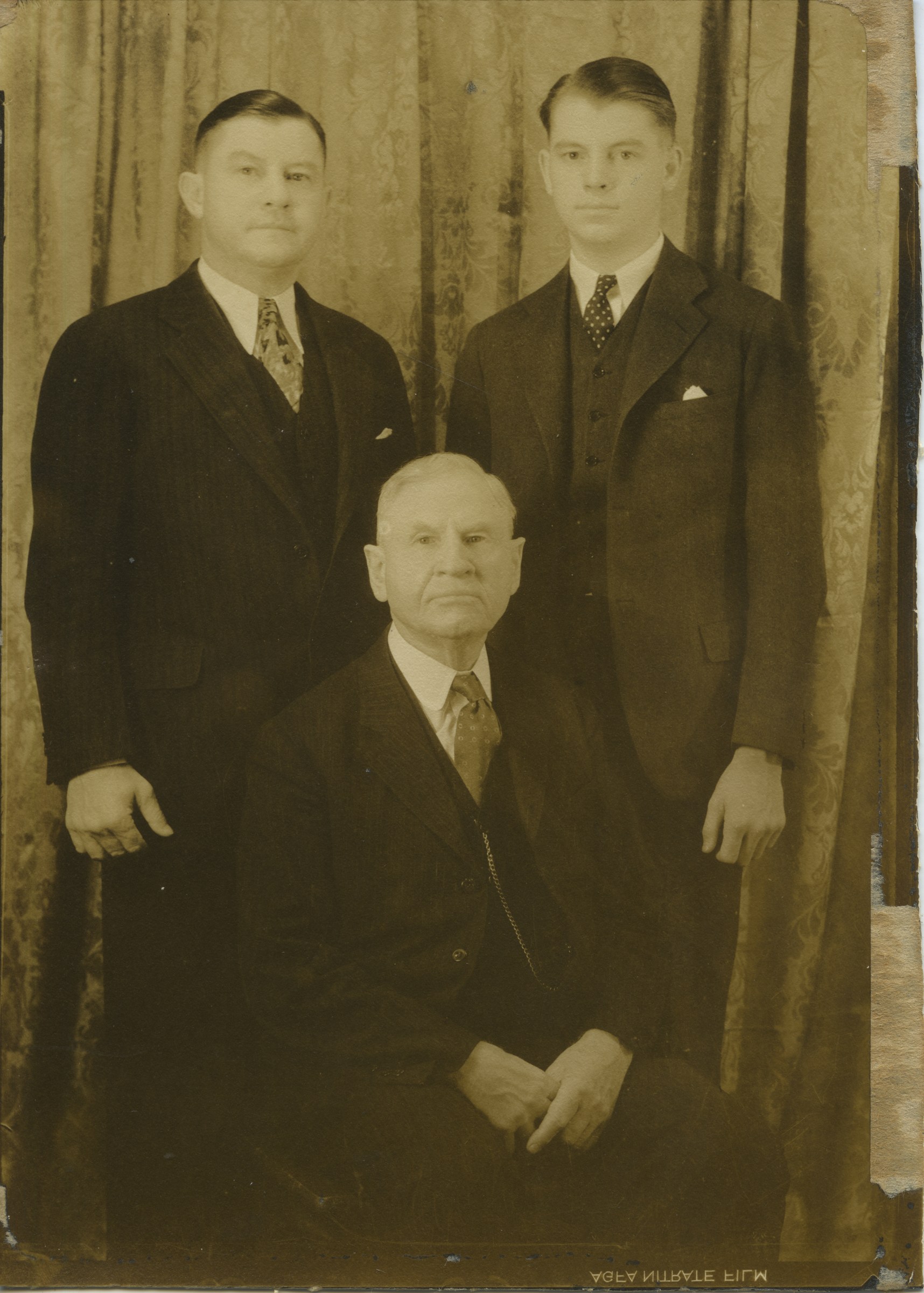
Harvard accepted him; the letter, dated 1932, is in his papers. He did not go. “Until I was seventeen, that is, when as an accommodation to the Depression it befell me to live with my grandfather and attend junior college rather than fulfill by commitment to be a freshman at Harvard,” he wrote. He lived in Burr’s house in Texarkana, a widower’s house: “Quiet except when I operated the player piano and Lizst or Chopin filled our space, and Burr with his eyes closed sat rocking in that great chair.”
He did not write of it as a loss. “This change brought me, I believe, a sense of reality denied young people sheltered, through school and into business, in affluence. The opportunity was one of Providence’s great gift to me.”
At Texarkana Junior College he played football under Warren Woodson. “It was in 1932, the depth of the Depression, when I reported to the field in Texarkana, 17-years-old, six feet three, 175 pounds,” he wrote. And on tape: “They were a bunch of good old roughnecks and it was a happy time in my life.” A Paris, Texas, paper in November 1933 lists him as a 180-pound tackle and editor of the college paper.
“In the summer of 1933 one of the great experiences of my life was to go to Diboll and work in the mill.” He stacked lumber on the Four Yard under Codjo Austin. “I worked ten hours then for a dollar-thirty-five until the NRA under Roosevelt went in, when I was raised to two-bits an hour. I have been a National Democrat ever since.” The next summer he checked lumber on the carline at Pineland. He wrote a series of columns about those two summers in 1971, and said what they taught him: “that living in the big house does not necessarily make you a big man, or living in the little house a little one.”
It was in these years, he said, that he began to see how black people were treated. “I was just beginning to awaken a little bit about discriminations because if you grew up in the south as I did, it was taken for granted.”
Austin, 1934–1936
He entered the University of Texas as a junior in 1934 and took his B.A. in 1936. He joined Sigma Alpha Epsilon in 1935. He acted with the Little Theatre of Austin: the Austin American of 27 April 1935 said “Latane Temple made an excellent Mickey” in The Shining Hour, and on 6 October announced him “back from New York after summer stock with the Hampton Players of Southampton and Quogue, to play Essex in Elizabeth the Queen.”
That summer of 1935 he had also studied drawing in New York. “I went off to the Arts Student League in the summer before the year I graduated from the University of Texas, studied under Reginald Marsh and Harry Sternberg.” And he had thought about the stage: “I’ve always believed that the best talent that I really have is my talent for acting, but that will never be proved except in the amateur theater that I was in, in my college years.”
His grandfather died in October 1935. His grandmother Crouch died at first light on Christmas Day that year.
Cottonseed, 1936–1942
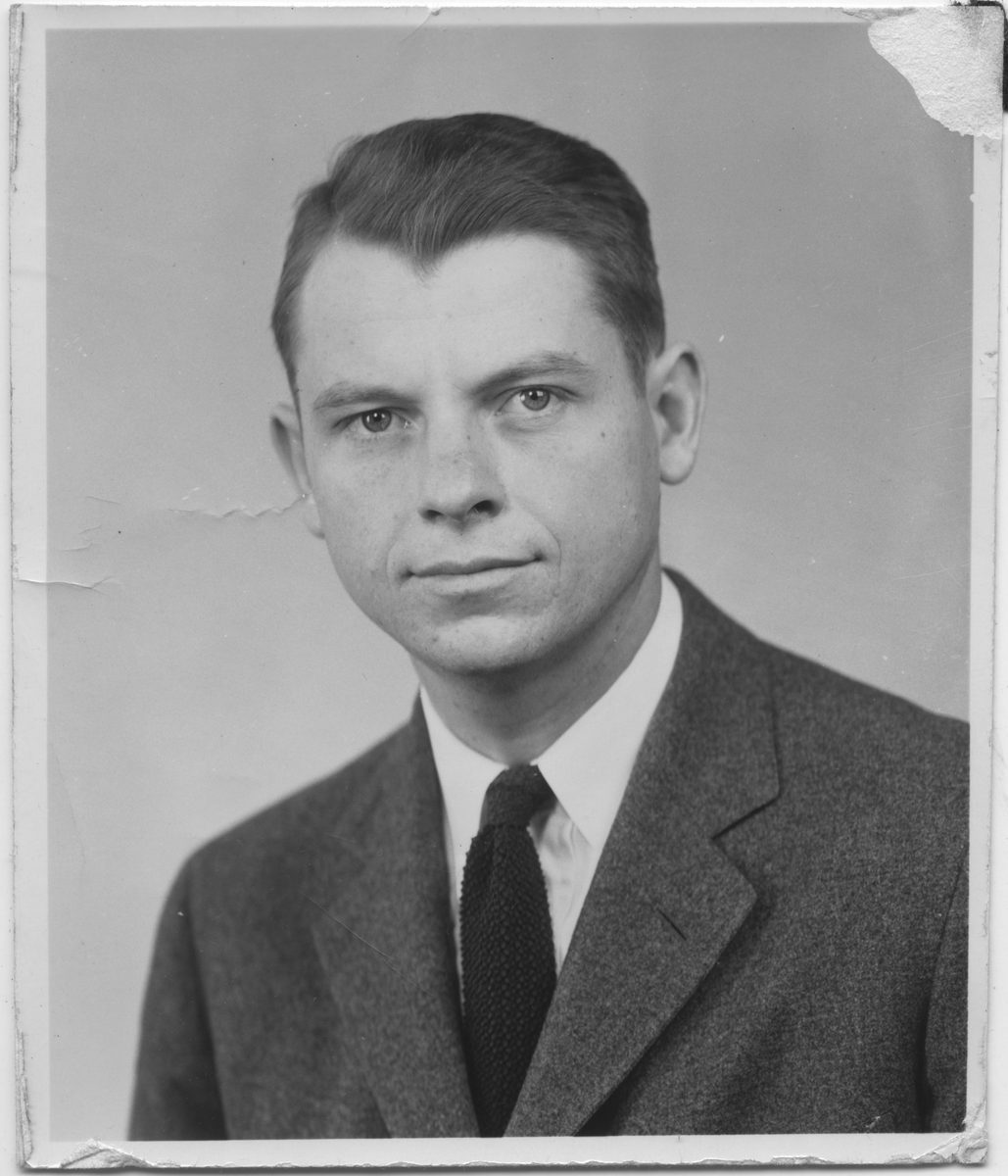
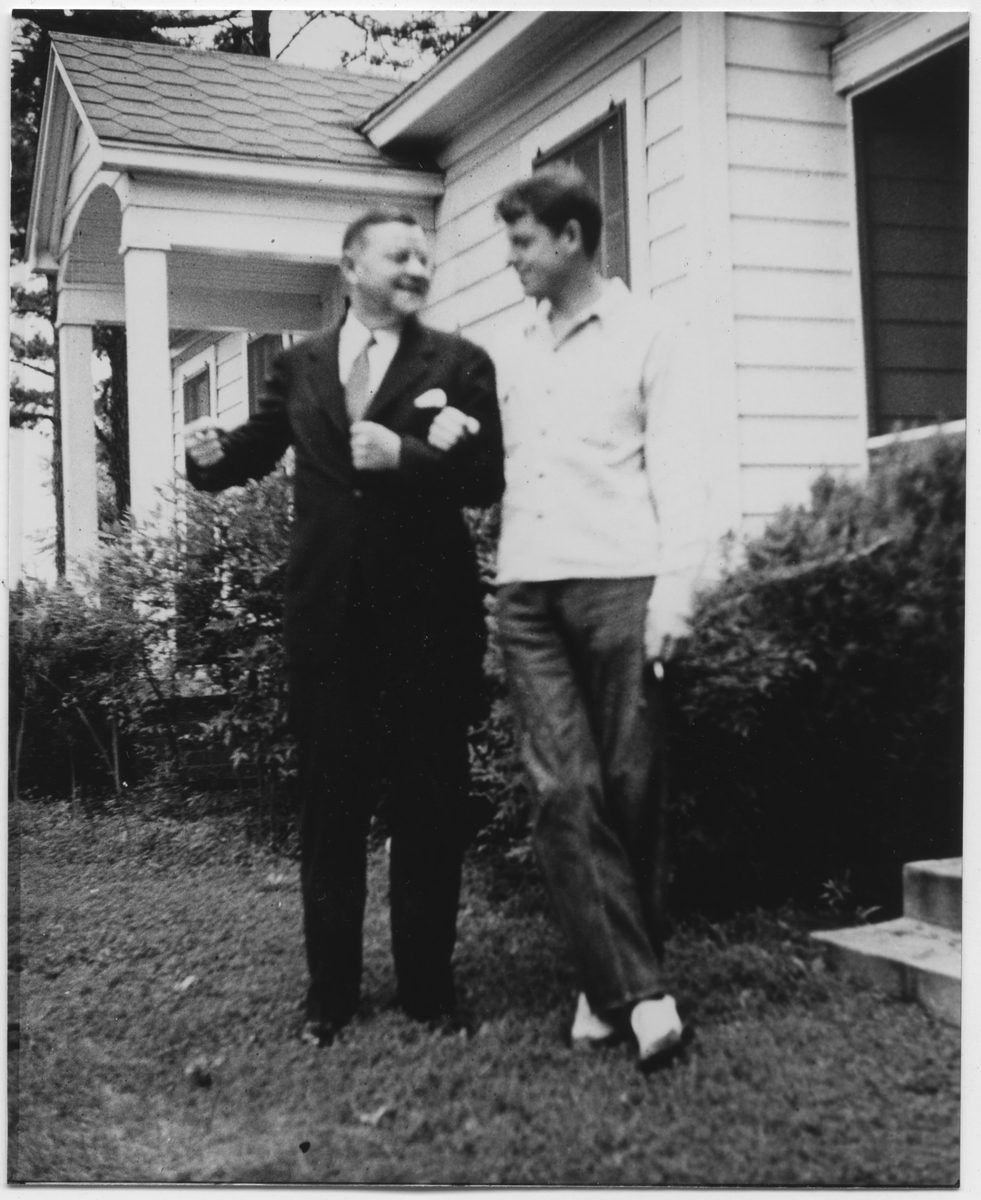
“When I graduated from the University of Texas I reported to my Uncle Arthur, who by then was head of the Temple family and head of the Temple Enterprises, to be assigned a job.” Arthur Temple sent him to the Temple Cotton Oil Company in Arkansas. “My first job was at $85.00 a month and after some orientation in the office with some instruction there in book I went on the road buying cottonseed and selling fertilizer.” He told the bookkeeper in Little Rock that his ambition was to own and work a farm.
He met my grandmother, Josephine Bond of Little Rock, in 1938 and married her on 17 February 1939. She was twenty. That year they went to Acapulco with an older planter couple; he wrote about it in 1971. About 1940 the company moved him to its head office in Texarkana, where he ran its Farmers Cotton Oil mill. Josephine learned to fly. Her pilot’s log for 1940–43 is in her papers, and a Fort Smith paper in May 1941 lists “Mrs. Latane Temple, Texarkana” among five women pilots on a state air tour.
He was not content. “We were married in 1939 and I was restless in my marriage and dissatisfied with the way the company I was working for was operated,” he said in 1985. The cotton oil company, he said, was “about 30 years old and had never produced a profit.”
The war, 1942–1946
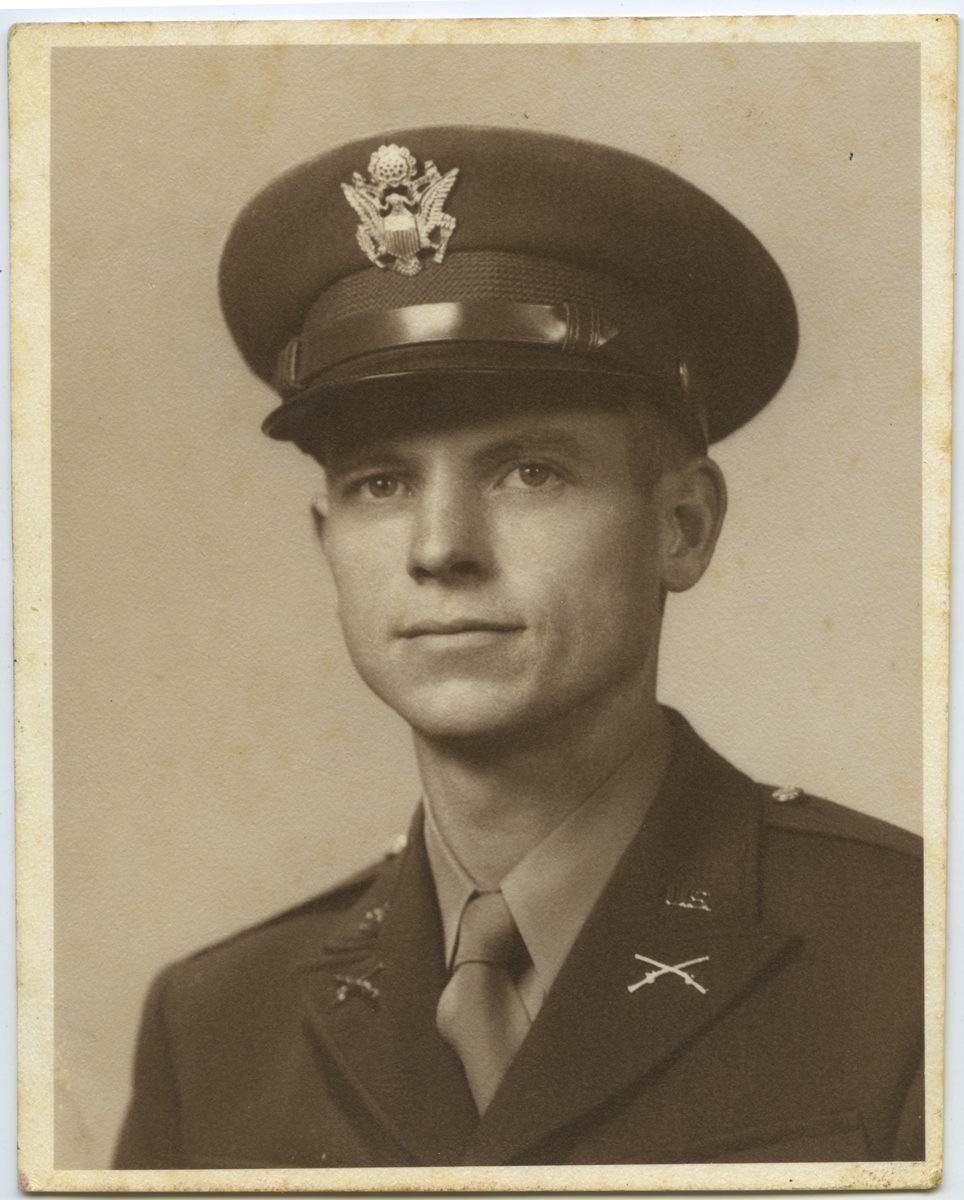
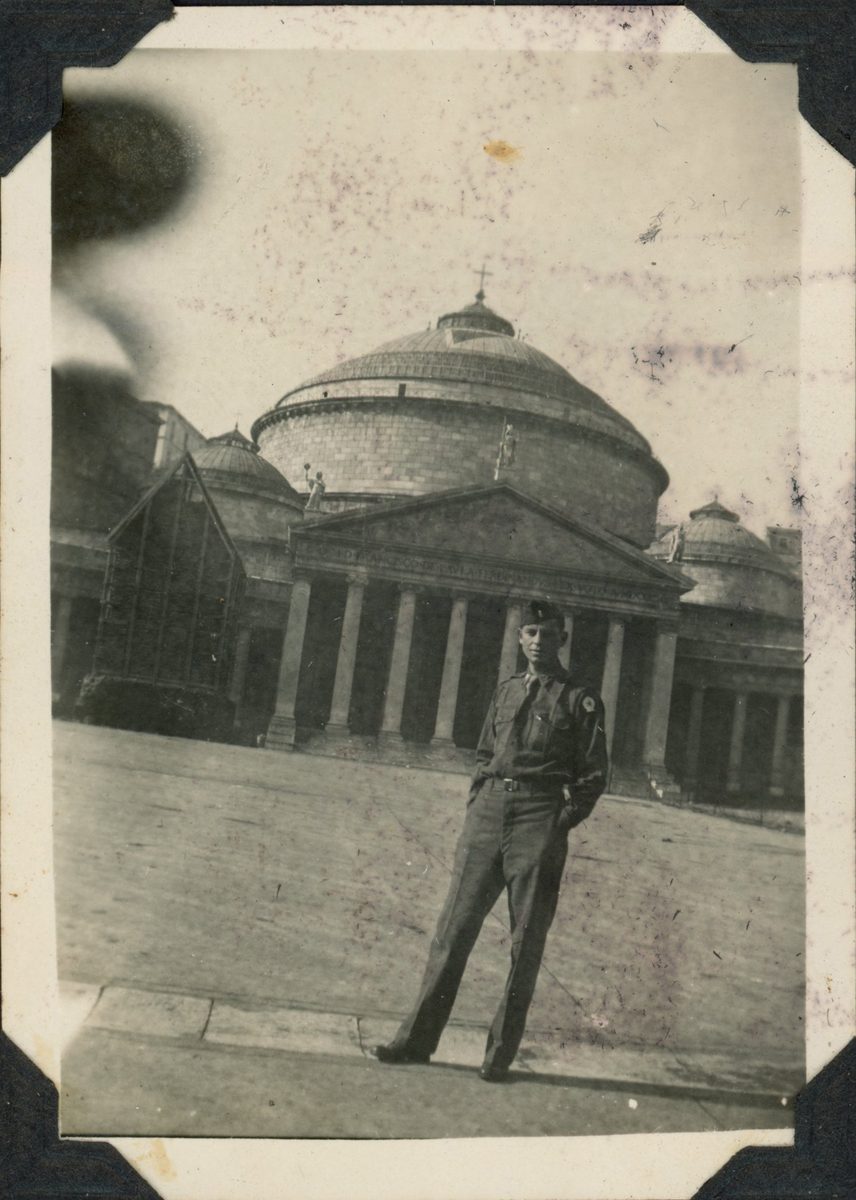
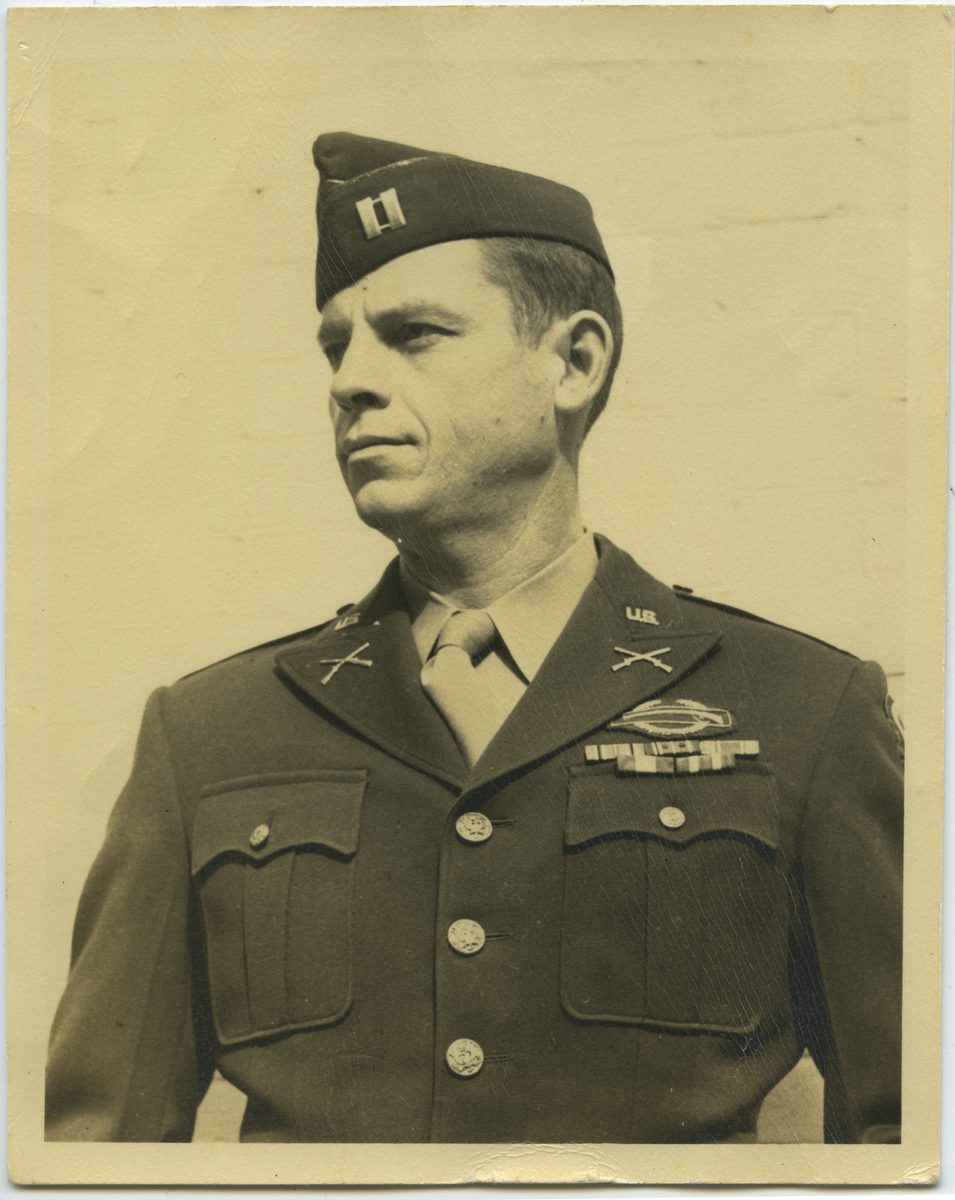
He volunteered in May 1942, though as a married man he was exempt. “All my life I felt that I was one of things that was expected of me, if our country went to war I would go.” He also said: “I went into the Army partly to get out of that,” meaning the job. He turned down an easy commission in the transportation corps: “if I was going to be an officer, I was going to get my commission the hard way, the right way.”
Basic training was at Camp Wolters and officer candidate school at Fort Benning. From Benning, as Candidate T. L. L. Temple III, he wrote to his mother: “Let it suffice to say I’ve been a scared little boy until today when I’ve begun to feel that I halfway know what’s going on.” He was commissioned a second lieutenant on 26 December 1942. “I was the No. 1 man in that officer candidate class,” he said, and called it “what I still consider about the highest honor I have ever had.” His letters show him with the 124th Infantry at Fort Benning from January 1943, at Fort Jackson, South Carolina, from October, and at Fort Meade by January 1944.
He sailed on a Liberty ship at the end of February 1944 and “arrived through the Straits of Gibraltar in March of ’44.” Two of his own later statements put the crossing a year earlier, but his wartime letters settle it: he wrote from Fort Meade on 4 February 1944 and from Italy on 14 March. He landed at Naples and joined the 85th Infantry Division as a rifle platoon leader, in Company A of the 339th Infantry. He went into the line “on April 18, I remember the date.”
Six days later he wrote to his mother: “Enlisted men are my love now that I’m away from everything else I love.” What he was fighting for, he wrote, was the “strain of human dignity” in the average man. “That is, the abstract thing. The very present and real thing, of course, is Jo and you and Helen and the children.” On 22 June: “They have put me in for the Bronze Star. It doesn’t amount to much for they are putting an awful lot of undeserving people in for it, including me.” He had the Combat Infantryman’s Badge. No later letter says whether the medal came.
In 1985 he told the interviewer about the fighting plainly, including what he was not proud of. He led patrols. He killed a German soldier at a window, and remembered the man as young and blond. He led his squad back through a minefield and his platoon guide was killed: “Those were altogether my fault.” Replacements were killed before he knew their names. He walked into Rome in June 1944 with people throwing flowers.
What he took from it he said twice over. “When you are in combat, you live right now because you don’t know if you are going to be alive five minutes from now.” And, asked if the feeling had stayed with him: “Yes, I’m reminded of it every time that I am inclined to be a little despondent; I remember that this is the exalted moment right there in life.”
After Rome he asked to come out of the line and was given a personnel job. When he was ordered back up for the push into the Po valley, he could not go. “I sat there and I seriously considered shooting my foot.” He went back to the regiment and was sent to a psychiatrist. “They called it combat fatigue. Of course, I wasn’t fatigued then, I just wasn’t able to go back up there.” He gave no date for this, and none of it is in his letters home.
The letters give the outline. On 16 July 1944 he was “temporarily in a job doing personnel work, which with luck could become permanent.” Then there is a silence. On 15 November 1944: “I’ve gone about a month without writing you and I know you’ve been worried.” “I was dissatisfied where I was, so I asked to be transferred and the process is under way. I’m in another replacement depot now waiting for a new assignment.” On Christmas night 1944 he was on duty in the rear with an Italian orderly, among Italian officers. He hoped the German drive in the Ardennes would be crushed and Germany lose hope, and added: “There’s no way to be Christian in wartime, is there?” So he left the 339th in the autumn of 1944, which agrees with the family’s obituary. The order he could not obey would then belong to that autumn, when the division was fighting north of Florence toward the Po valley. That is my reading of the dates, not something a letter says. His separation papers would settle it.
He spent the rest of the war on the Allied military mission to the Italian army at Naples and then at Allied headquarters in Rome, was promoted to captain in 1945, spent six weeks in hospital with hepatitis, and came home that autumn in charge of two hundred men. “I returned on the train to Little Rock and there was my wife.” He was discharged in 1946.
While he was overseas Josephine wrote to him almost every day. Her V-mail letters from February 1944 to November 1945 are numbered 1 to 751 and are at The History Center.
Forty years on he said: “I do have a great feeling of guilt about the war because I’ve been in combat, my platoon turned over more than once as far as causalities were concerned.” And: “I shot my best stick and that’s all I can say but I wish that it had been different.” In 1975 he recorded two tapes about the Army for his family, saying he had become “keenly aware” of how much that experience meant to him.
Little Rock, 1946–1952
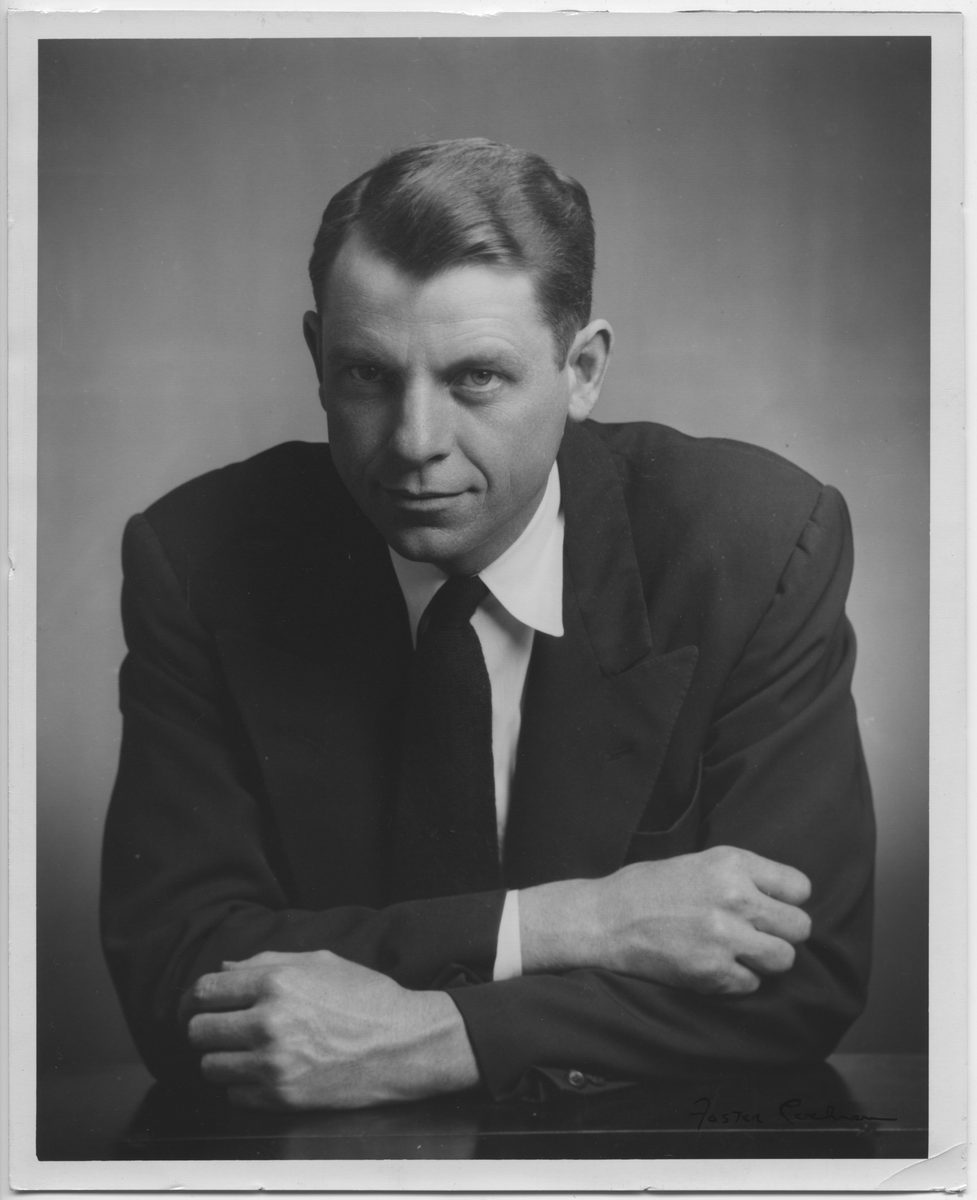
He went back to Temple Cotton Oil in Little Rock. Nine of his letters to his father from 1946 survive, firm and affectionate, about protecting his father’s stock from his father. His father died in March 1947. That year the Arkansas Gazette ran a feature on the house he and Josephine had made out of a five-room cottage in Woodland Heights, with books on two walls, etchings, paintings by New Orleans artists and brass pots “brought back from Italy.”
His uncle told the company “We are keeping Latane,” and gave him the bad debts. He collected the receivables, sold the bad properties and then recommended closing the business. He counted it one of his two successes: “reorganizing, operating and liquidating the Temple Cotton Oil Company up in Little Rock, which had a history of failure and plunder.” He was elected president of the Valley Oilseed Processors Association in April 1951, and in January 1952 the Hope Star reported that the company would quit the oil-mill business.
He went into public life in Arkansas. Governor Sid McMath appointed him to the State Hospital Board in 1949. In May 1952 he was named chairman of the Arkansas-for-Kefauver movement, and he went to the Democratic convention in Chicago as a delegate. “When Adlai Stevenson was nominated, — that radical, — I served as campaign chairman for Pulaski County, Arkansas,” he wrote. Harry Ashmore of the Arkansas Gazette was one of his circle.
It was a postwar conviction. “I was one in the G.I. revolt. … If our country could send us off to get shot at in its defense, we could damn well have something to say about how it was run when we got back.”
Diboll, 1953–1960
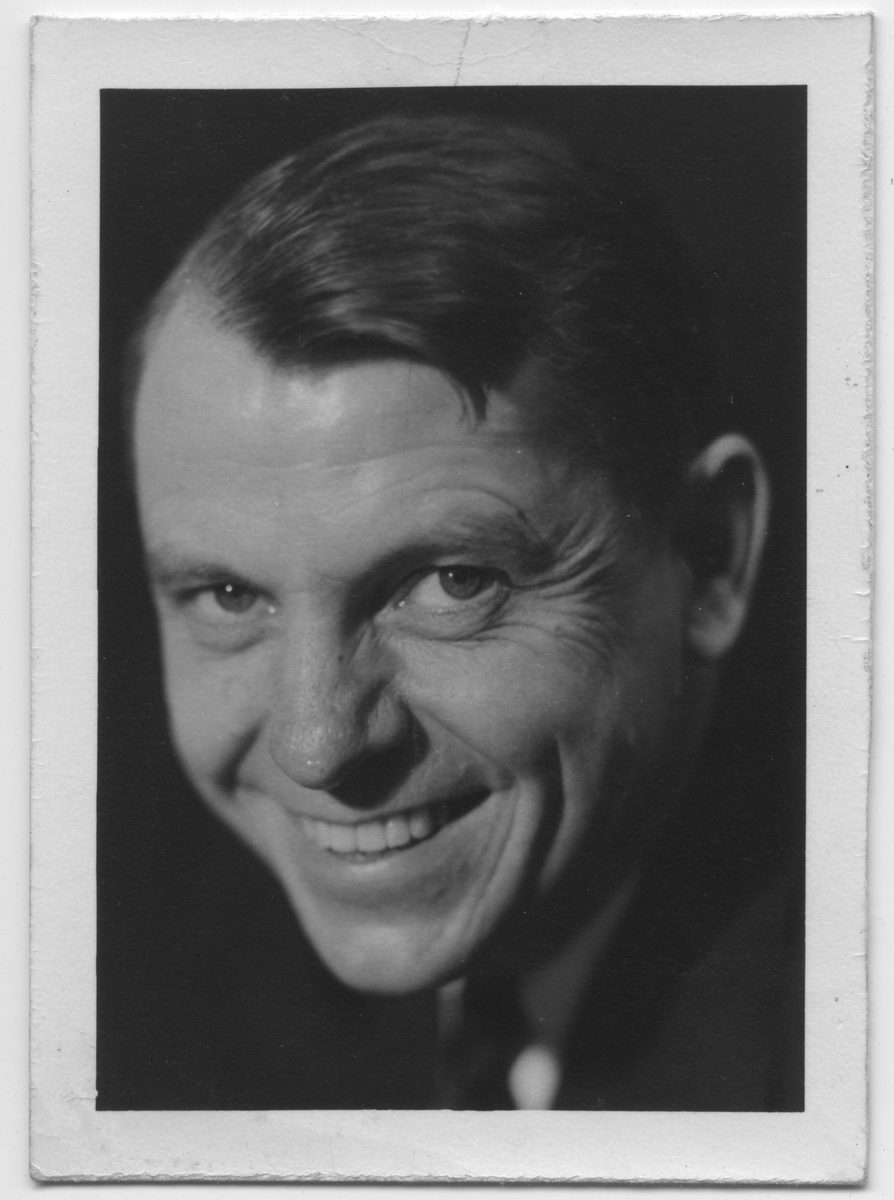
“I went to Diboll in January 1953 to become sales manager of Southern Pine Lumber Company.” The family lived in Lufkin. The fifth child, Kate, was born in 1957.
He knew he was not a lumber salesman. “I was made general sales manager but I had assistants there that knew the markets.” He made the job into something else: “something that was a sublimation of what I considered my talents to be, or my inclinations to be which are acting and the arts.” He gave speeches to lumber dealers, chaired the Southern Pine Association’s trade promotion committee (his other success, he said), and ran the company newspaper. “I was in charge of the Free Press. I wrote editorials, I wrote a column, I wrote music reviews, I wrote art criticisms, mostly of art shows that I arranged there in the Pine Bough.” His papers have his column “Bread ‘n Butter” from July 1958 to April 1961.
He gave his cousin Arthur Temple Jr. the credit for the town’s institutions. “I may get a good deal of credit for Diboll Day and I’ll get some credit for the library, but in both instances, it was Arthur saying ‘Latane, I think we ought to have a library, why don’t you take that?'”
He was a liberal Democrat among conservative ones. “I felt pretty much an orphan.” In 1960 he went to the Los Angeles convention as an alternate for Lyndon Johnson, then ran the Kennedy–Johnson campaign in the Seventh Congressional District. “We carried the district three to two.” His cousin thought he was turning the paper into “a political tract,” and Latané agreed: “he was right.”
Lyndon Johnson wrote to him at Diboll on 19 November 1960: “You left your mark everywhere you went during the campaign– and it was a mark of success for our Party and our Country. I will not forget what you did.” Twenty-one pages of letters from Johnson, Lady Bird Johnson and Walter Jenkins, 1960–64, are in his papers.
Why he stayed in the family company at all, he explained in 1985. “I was very largely motivated in my being in the company by the desire to somehow or other to vindicate my father or to erase his image of the prodigal and to somehow or other to restore my line in the company.” “I was sitting at the second table, I was the oldest son of the oldest son.”
Houston, 1960–1965
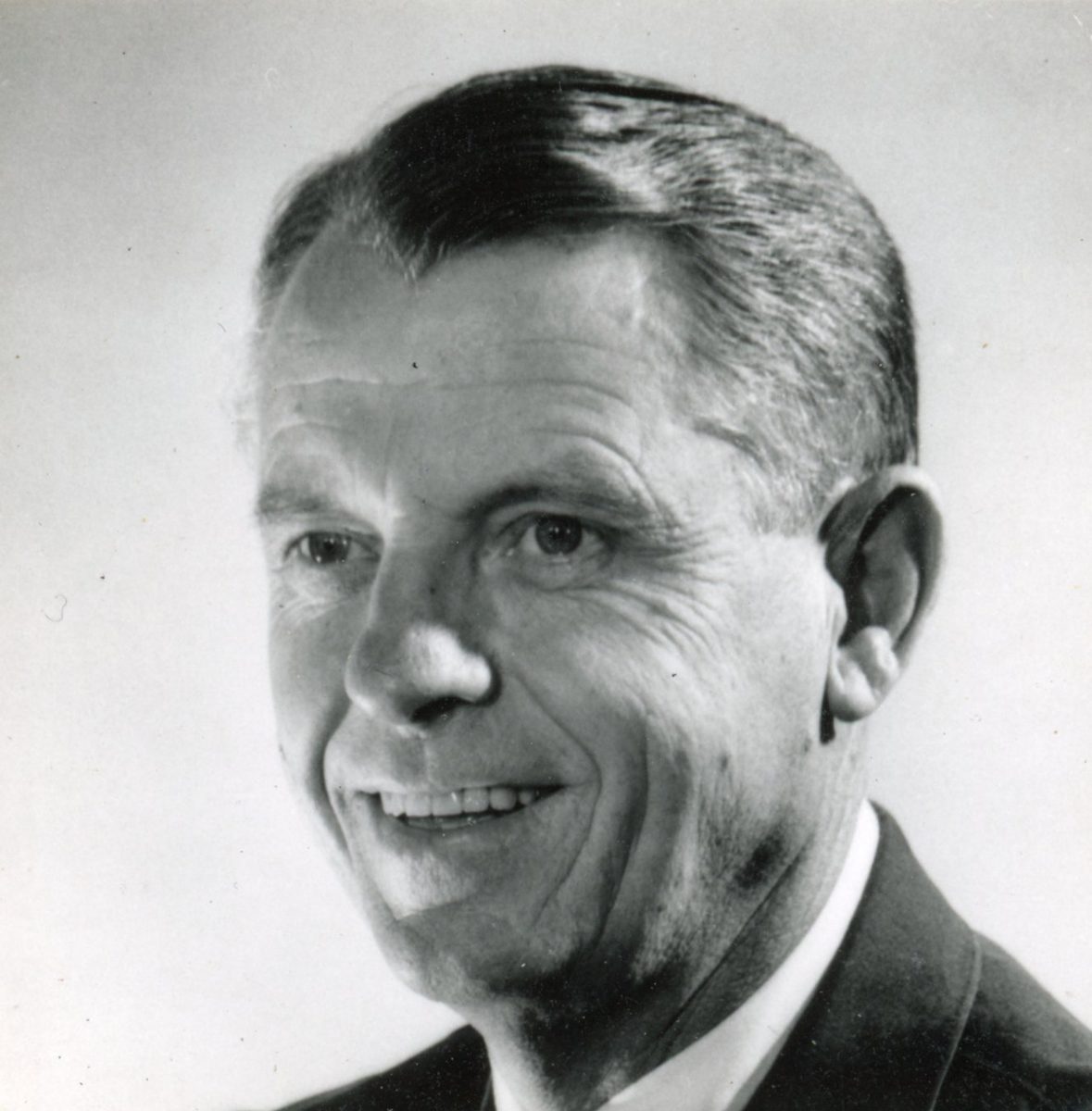
In 1960 Arthur Jr. made him head of the company’s retail yards, thirty-eight of them across Texas, run from Houston as Temple Lumber Company and later Great Texas Lumber Company. The family followed in 1961 and lived on Reba Drive. A Houston Post feature that October began, “The Latane Temples collect children and paintings.”
It failed. “This turned out to be a debacle for several reasons.” He trusted his subordinates, he said, and had no financial control: he would not know July’s results until September. And he blamed himself: “when I got down in Houston I was a big shot with two martinis at lunch and taking people out to lunch and making these big plans and playing a role rather than staying close to things as I should have.” When Arthur came down to close yards, he offered his resignation.
The year he left is given as about 1963, 1964 and 1965, depending on the source. Johnson’s office was still writing to him as president of The Great Texas Lumber Company in January 1964, and by that July at his home address, which points to 1964. He was forty-nine.
His cousin Temple Webber Jr. said in 2013: “But Latané, I think he was ahead of his time. He felt that marketing was going to be the future of the lumber industry.”
Twenty years later it still hurt. “Nobody will know how pained I am when I go to Diboll and realize – and reflect on any of that career and I wake up at night grieving over it because it was a debacle.” And of the whole of it: “Looking back on it I realize how miscast I was as a corporate executive.”
His college roommate Ed Van Zandt, by then a Fort Worth banker, gave his publisher the dedication page for his novel The Seventh Girl in June 1969. It was to read “For Latané.” “Latané Temple was my college room mate in my tender years and has been my special friend ever since. It is very important to me.” Latané said in 1985 that a hard letter from Van Zandt after the Houston failure had ended the friendship, and that the dedication came afterwards.
His own man, 1965–1973
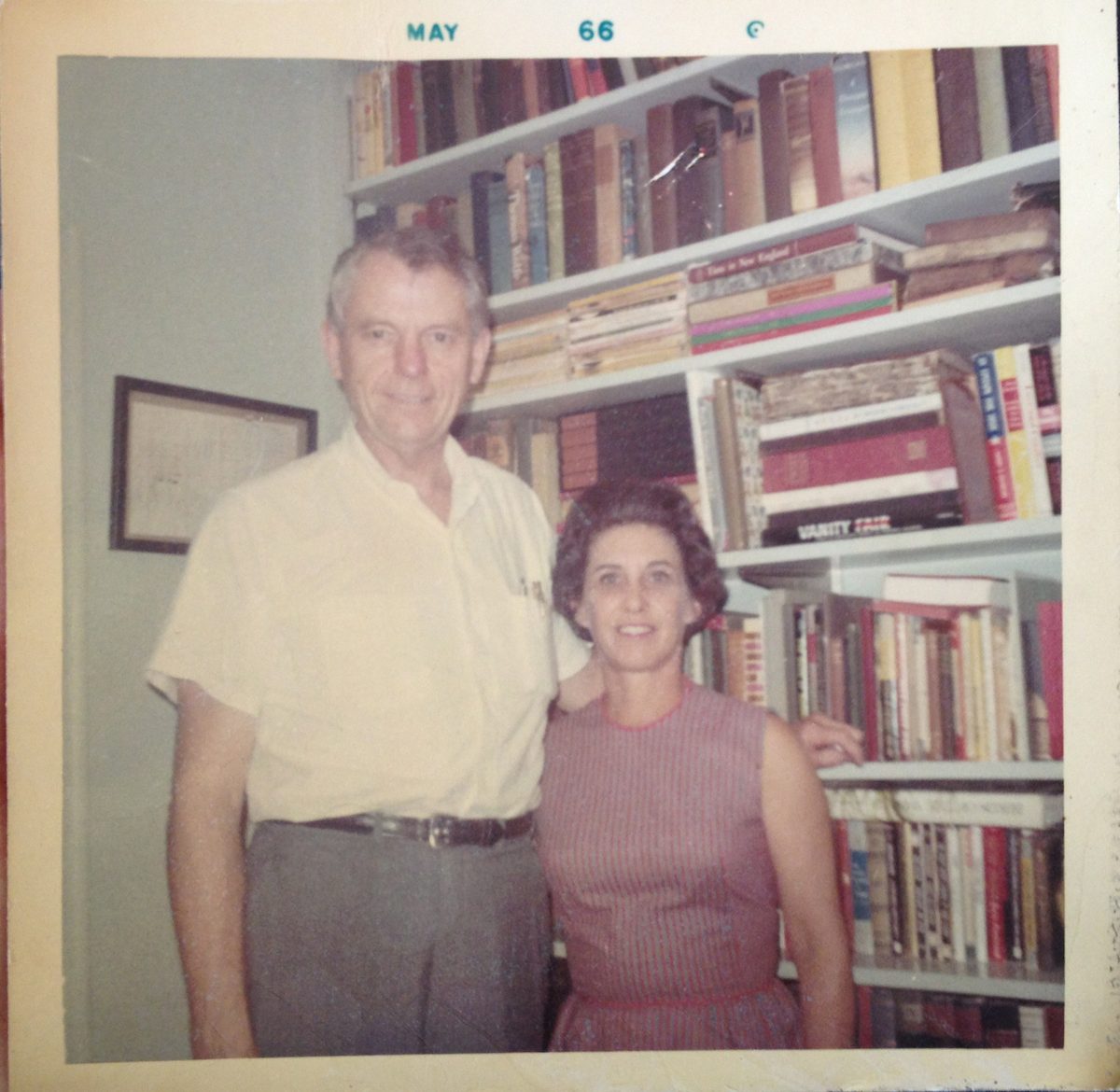
He did not take another job. “I opted to chase my own rabbits when I got, through savings and extraordinary good luck, some inheritance and some good investments, where I felt the wolf was not in my neighborhood.”
He gave his time to Houston. He was president of Civic Houston by 1964, a director of the Texas Bill of Rights Foundation and the Houston Symphony Society, and in 1971 president of the board of Julia C. Hester House in the Fifth Ward. His letters to the Houston papers in 1967–69 are for school integration. In the spring of 1965 he, Josephine and one of their daughters spent four months in Europe.
He studied printmaking, oil painting and life drawing with Houston teachers and began to show: “a pair of tiny abstracted landscapes” in a 1968 group show. He built a studio on Buffalo Bayou. “My studio is on the bank of Buffalo Bayou hidden in the green seasons by vines and bushes among towering old ashes and elms.” In 1969 he grew a beard and kept it.
In November 1969 the Diboll Free Press asked him back. “Well, here we are again, ten years later.” “In My Opinion” ran weekly. I have 321 columns from 1969 to 1977, and the list of his papers runs to 1984. He wrote about Diboll and Pineland, Mexico, Watergate, energy, the family’s history and his own garden. He was for integration, for the Equal Rights Amendment, against the war in Vietnam and against waste. “A great value of this column for me is that it is a catharsis. I hope it does not shorten the lives of any incensed by it.”
In January 1973 he had his poems printed as a 52-page booklet, Bird Against the Sky: Some Fragments.
The divorce and Galveston, 1973–1985
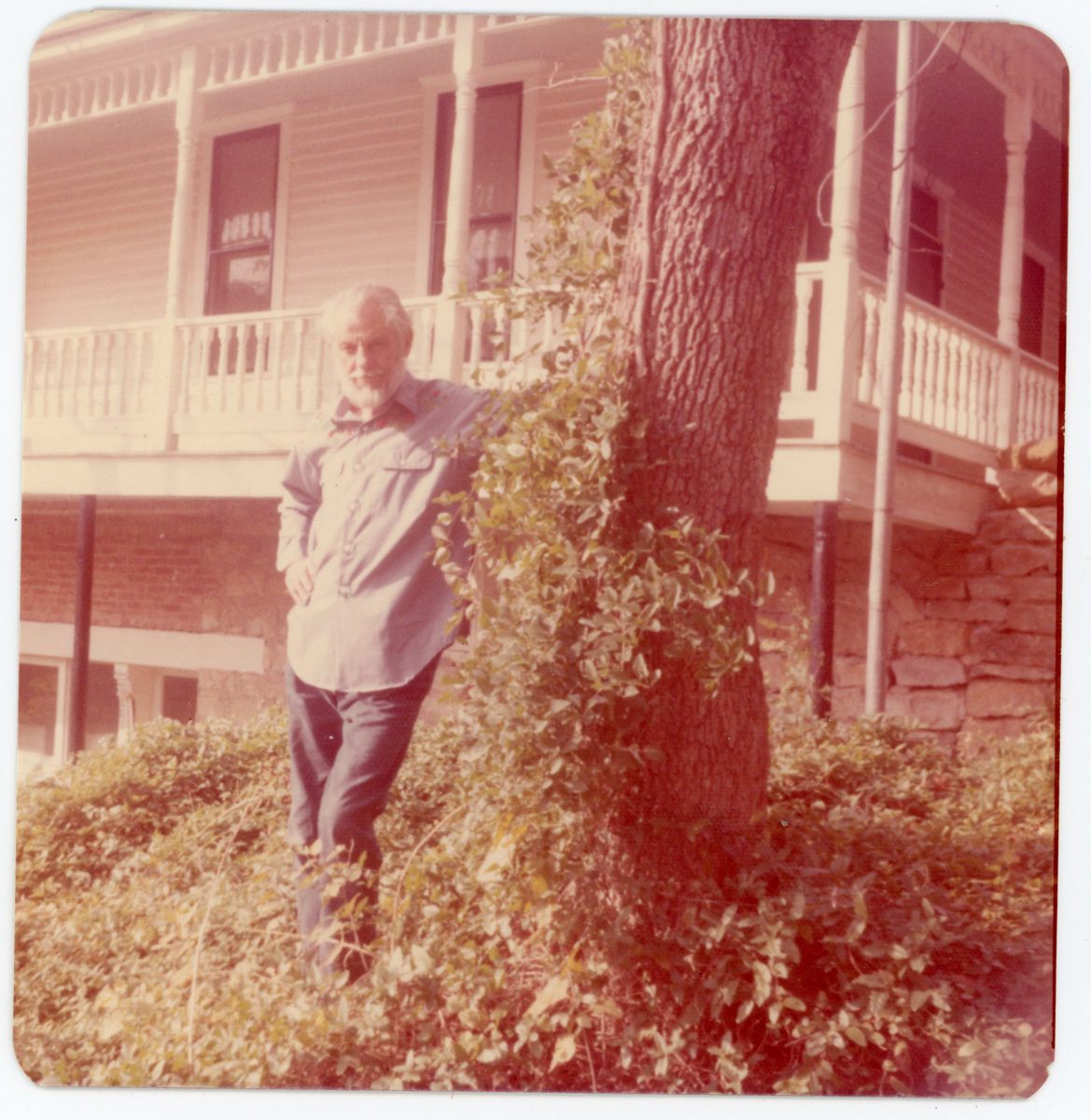
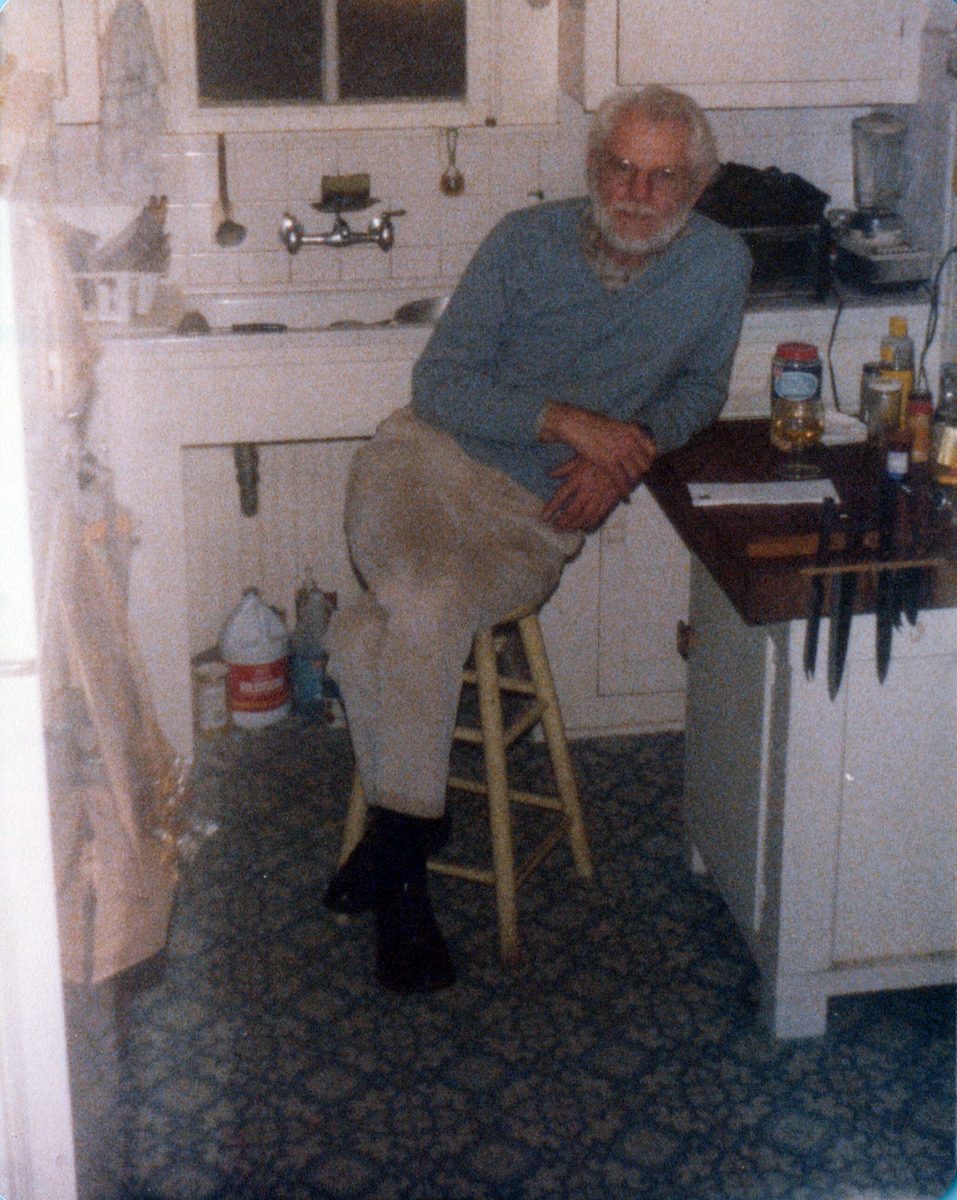
He and Josephine were divorced on 11 October 1973. They had been married thirty-four years. The columns never say so. In January 1974 he wrote only: “As fate would have it, I am currently into the bachelor life, and, yes, I do my own housework.” He was living in the studio, one room of 480 square feet.
In 1985 he counted the marriage as one of his three failures, and he did not blame her. “We were married for 31 years but in areas no one has ever replaced her.” Thirty-one years from 1939 is 1970, three years before the decree; he may have been counting to a separation, and nothing I have read says. He said that he and Josephine were “best of friends” and spoke at least once a week, and that they meant to be buried side by side.
In 1974 he bought an 1877 house at 3518 Avenue M in Galveston. “I bought it for $11,000.00,” he said, and spent $40,000 on it. He wanted room for his children to visit. “I’m newly single, and this house gives them a place to come to visit,” he told the Houston Chronicle in April 1975. “It gives me a place to put some heirlooms, my pre-Columbian art and the painting I do, which is an ego trip.”
The Houston Post columnist Leon Hale visited in 1976 and found a man of sixty-one who “lives alone, not counting dogs, in a great old white house on Galveston’s Avenue M.”
“I live in an ivory tower. Retired. Doing my own thing. Watching the world go by.” He gardened, sat on the historic district board, travelled alone for a month in Italy and France in 1975, and went to Mexico most years. He showed drawings at the Katy Nail Gallery in Houston in 1976, and his pre-Columbian collection was exhibited at the Texas Memorial Museum in Austin in 1981. On his sixtieth birthday he had summed up: “In its broad sweep my life has been fairly typical for my time and circumstances.”
His artist’s statement, undated, is in The History Center’s file: “I regard the role of artist as the highest men can aspire to, even higher than public service or scholarship. I claim the right to aspire.” And: “It is not a hobby. It is my central concern. I cannot help it.”
His mother died at Galveston in December 1980.
In June 1985 he gave his papers to The History Center at Diboll: 45 boxes, 1803 to 1984, including the Wayland letters he and his sister had carried out of the old house in Virginia in a pillowcase. That June and July he recorded two long interviews, and in December a tape about his Texarkana childhood.
Religion
“When I was young I was an atheist,” he said. Before he went overseas he tried the churches one after another. He came to Christian Science through Josephine’s mother, and it held: “I didn’t like the language of Mary Baker Eddy or the strangeness of the service but when I left I had something.” His grandfather and father had been Christian Scientists too. He was no paragon, he said, and he saw doctors. In 1986, at seventy-two, he wrote in his journal: “Here I am who professes the teachings of Christian Science bowing to the custom of medical check-ups.”
San Miguel de Allende, 1985–1997
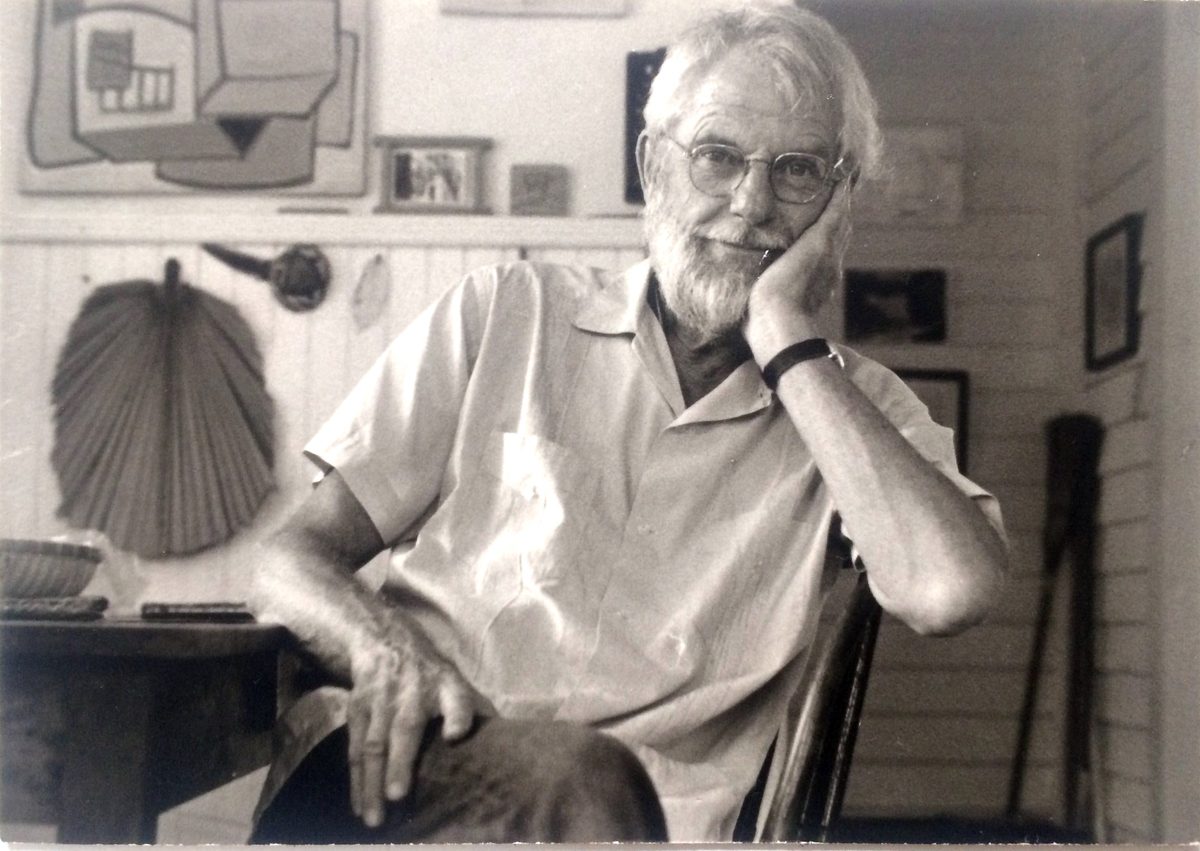
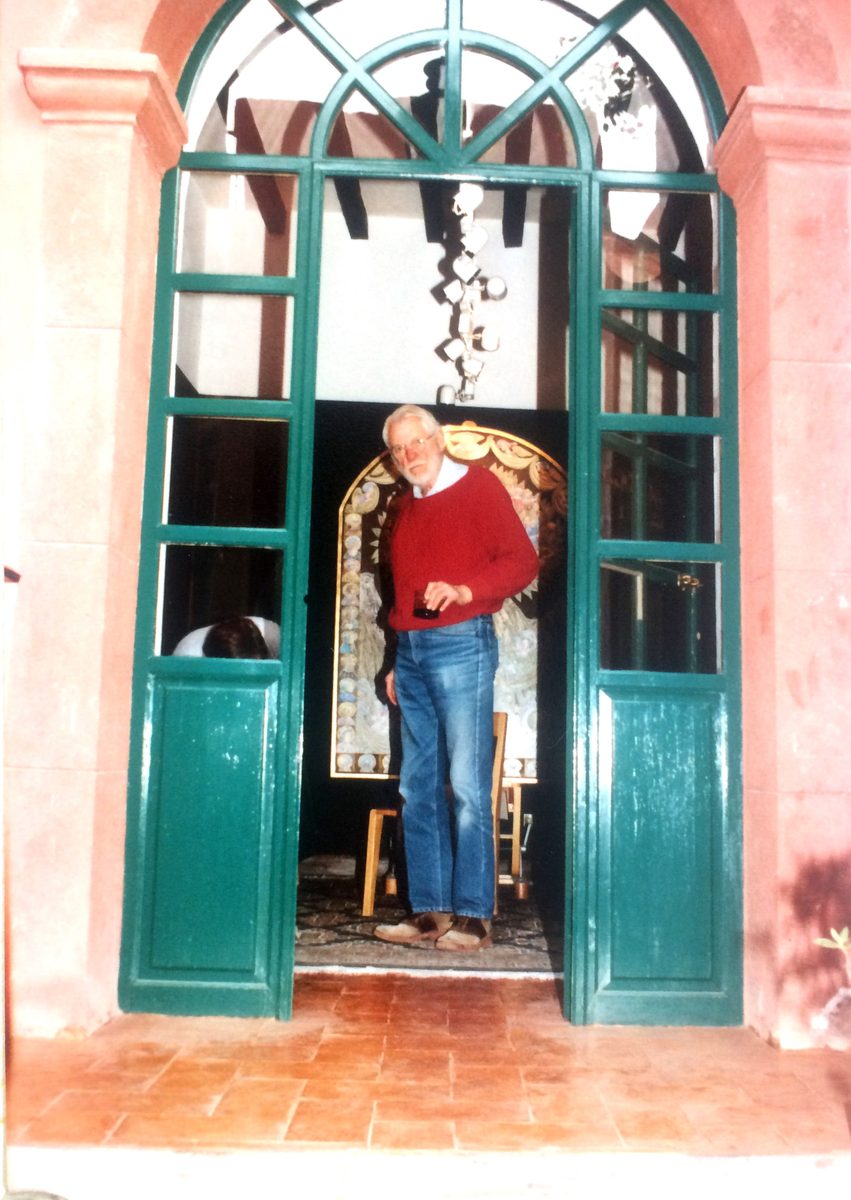
The family’s obituary says he moved to San Miguel de Allende in 1985 and “established his own art gallery, Galeria L Temple.” By July 1986 Leon Hale reported him “now down in Mexico.” His own papers put the gallery later: his journal of that winter never mentions one, and in November 1991 he calls it new.
The journal runs from December 1986 to February 1987. He was living in his own house and garden in San Miguel, still entering Mexico on a tourist card, studying Spanish, and keeping his mornings for work. At the turn of the year he wrote: “So in summary, 1986 has been overall the best year of my life. Yet, this is not to demean other years, particularly many of the family years.” That winter he contracted to buy an eighteenth-century house at Jesús 7, a block and a half from the main square. The journal is also where he works out his life with the woman who became his second wife. That part is hers as much as his, and I have left it out.
He had a retrospective at Hooks-Epstein Galleries in Houston in May 1987, and a show of works on paper with his own poems, “Caprice on Paper,” at the Museum of East Texas in Lufkin in the autumn of 1992.
Twenty-four of his letters to me survive, from 1991 to 1996, most of them headed “L Temple / S Miguel, Jesús 2.” The gallery opened in November 1991. “My gallery/office is elegantissimo: fabric walls, oriental rug, custom designed and made desk (by me), set up for slide and video viewing.” It was to show other artists, not himself, and he changed the hanging every three weeks. It did not pay, and in July 1994 he wrote: “I’m going to discontinue my gallery as of September 1.” “I’ll be Latané Temple, Collector, and still buy pieces as I may wish and sell if I have a buyer.” What was left of it went into his wife’s shop.
A Texas visitor who looked him up in San Miguel about then wrote home: “At 80, he is still a hunk of a guy–the sort of white haired, bearded fellow who can still wear jeans and a chambray shirt and look terrific.” His gallery was showing Rivera and Tamayo, and he lived across the street from it in a house the Mexican government had cited for its restoration.
I visited him in the summer of 1991, in March 1994 and in June 1996. After the 1994 visit he painted a picture and wrote on the back “Hommage to Owen Temple.” That same spring he learned that my mother had kept his columns and that I was reading them. “Unconsciously I wrote them, in a manner of speaking, for you. That is to say that I have wanted to live on in a descendant who has the sense of curiosity and wonder that has enriched my life, who shares the spark that might flare up into flame down the generations. This applies to the verse also, of course.”
To one of his granddaughters that autumn he told the story of officer candidate school again, with what the 1985 interview left out: the class standing was a vote. He had helped the other candidates “and never criticized them or called attention to their shortcomings.” “I wound up number one, perhaps what I can be most proud of in my whole life.”
On 30 August 1994, at seventy-nine: “I’ve been having the best time in my life lately.” “I’ve been makin’ pictures.”
In November 1995 he gave it all away. “I’ve let up on taking the gallery very seriously, given my collection, acquired and my own work, to the Museum in Lufkin. It went there last week.” The obituary dates the gift to 1996 and describes it as “totaling hundreds of pieces, both pre-Columbian and contemporary”; his own letter, written the week after it left, is the better witness to the date. He turned the emptied room into a studio beside his workshop, so that he could spend his time “playing: making things, painting, drawing, sculpting, collaging, whatever.” For his eighty-first birthday he was given bantam chickens, and built them a coop. “Me, I am at the best time in my life since I resolved to make a genuine effort not to do anything I don’t want to do.” “Now I play in my workshop and studio, go to coffee with a friend, read or whatever I want.”
September 1997
He died at home in San Miguel de Allende on 9 September 1997, aged eighty-two. His last letter to me is dated four days earlier.
Arthur Temple Jr. wrote to a friend nine days later. Latané had a heart attack in the night and his wife got him to hospital. “I talked to him the day before he had his heart attack,” Arthur wrote, and Latané had told him, “I never felt better in my life.” The doctors thought he would recover. “However, at 5:00 that next afternoon, he put his head back and quietly went to sleep forever.” And: “Latane was just like a brother to me and we shared my WATTS line about every week.”
The memorial service was at the Museum of East Texas, and the family asked for gifts to it. At the service I played Jimmie Rodgers’s “T for Texas,” the song he had told me to sing whenever I wanted to win over a difficult audience. Arthur’s foundation set up a $500,000 endowment there for exhibitions. He was cremated. His ashes were placed at Mount Holly Cemetery in Little Rock on 24 June 2001. Josephine had died in Little Rock in 1988.
How he summed himself up
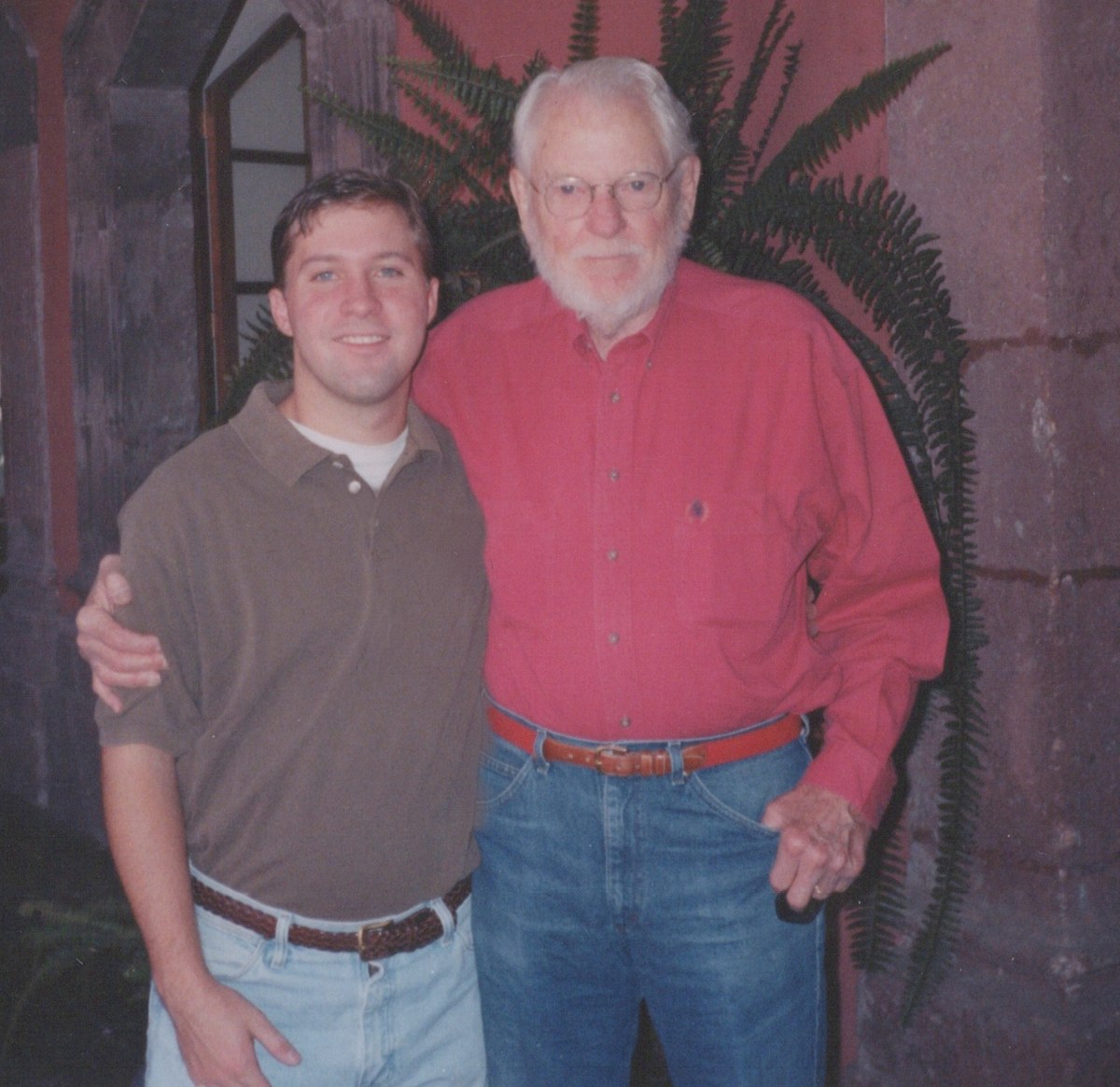
He ended the afternoon of the three failures this way: “Somehow or another it all flowed into what I think is a successful place in life.”
Of his place in the family he said: “It is a great tribute to my family that they have allowed me to be the radical or whatever, in the family, the aberrant.” And of himself: “It’s typical of me that I’ve got about four good years in everything that I do.”
Two of my songs have him in them: Rivers Run From Many Waters and Old Homeplaces.
What isn’t known
The biggest gaps: when he first went away to school; the date of his parents’ divorce, and whether he was ten or twelve; the day he was commissioned, exactly when and why he left his regiment in the autumn of 1944, and whether the Bronze Star was awarded; the year he left the company; what he was considering in 1956, when a relative’s letter urges him not to leave Southern Pine; when he moved to Mexico and whether there was a gallery before 1991; whether the column really ran six more years after the last one I have, of December 1977; and how many of his works the Museum of East Texas and other museums hold. His Army separation papers are among his papers at The History Center, and his sketchbooks and journals are on microfilm at the Archives of American Art. If you know anything about any of this, I’d like to hear from you.
Sources
His own words. His 1985 interviews with The History Center in Diboll, and his own tape of December 1985; his “In My Opinion” columns in the Diboll Free Press (1969–1977); his letters to his mother from the Army (1942–45); his journal of December 1986 to February 1987; his twenty-four letters to me (1991–1996) and one to a granddaughter (1994); his typed outline of his life and his statement on art, in The History Center’s file; and two tapes of 1975 and 1977, which are machine transcripts that nobody has checked by listening.
Records. The History Center’s guide to the Latané Temple Papers and its biographical note; the obituary his family sent out on 10 September 1997; the Mount Holly Cemetery burial guide; Josephine Bond Temple’s papers, with her pilot’s log and wartime letters; and the family tree.
Newspapers, 1932–1992, including The Times of Trenton on Class Day; the Austin American on the Little Theatre; the Arkansas Gazette and Hope Star on Little Rock and the cotton oil company; and the Houston Post and Houston Chronicle on Houston, Galveston and Mexico.
Letters from others. Lyndon Johnson to him (1960–64); Ed Van Zandt to his publisher (1969); Arthur Temple Jr. to J. Q. Mahaffey (18 September 1997); and a visitor’s letter from San Miguel in the mid-1990s, whose writer is living and is quoted once.
Family recordings. Temple Webber Jr. and Kate Temple (2013), from a proofread machine transcript.
The Museum of East Texas, Lufkin, whose page on him describes the collection he gave. That page puts his death in 1995; he died in 1997.
Photographs. From family collections. His paintings, drawings and prints are in The Art of Latané Temple.